
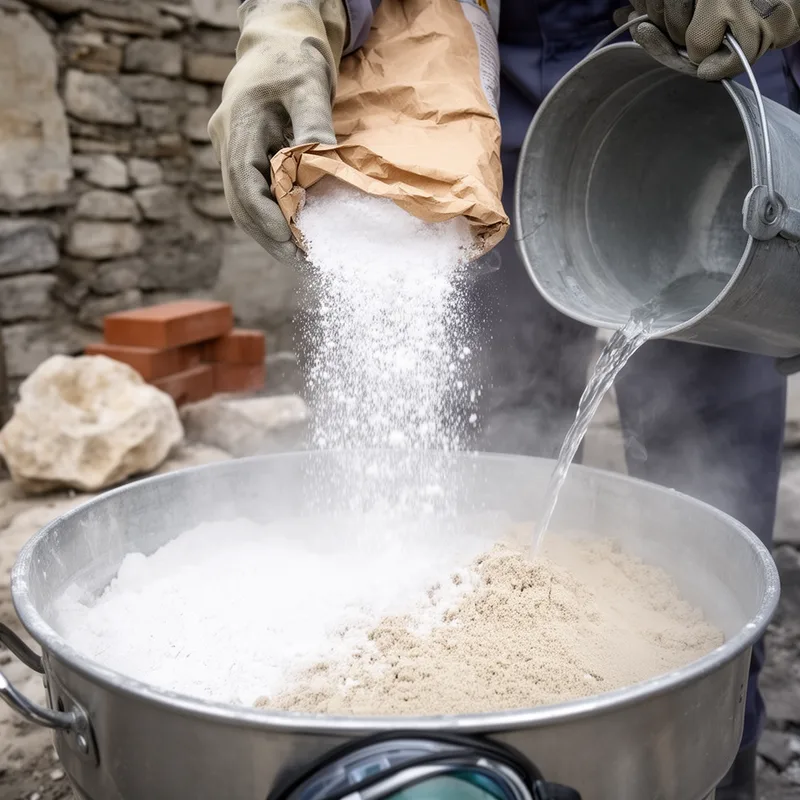
caustic lime
- noun
- /ˈkɔːstɪk laɪm/
- Specialized
- When water was added to caustic lime, it produced heat and formed slaked lime.
Examples
-
The workers handled the caustic lime with gloves to avoid chemical burns.
-
Farmers often apply caustic lime to improve soil quality.
-
Old buildings sometimes used caustic lime as a key ingredient in mortar.
-
The construction workers used caustic lime to stabilize the soil.
-
Old buildings sometimes used caustic lime as a key ingredient in mortar.
-
The workers handled the caustic lime with gloves to avoid chemical burns.
-
Farmers often apply caustic lime to improve soil quality.
Synonyms

 14
4.4
14
4.4

A white powder used in building and farming to make soil less acidic
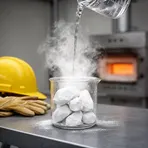
A white solid chemical used in building and industry that makes lime when water is added and gets hot

A white powder made by heating limestone that reacts with water

A white, very strong chemical used to make mortar and cement

A white powder made by heating limestone that is used to make lime and in industry

A white powder like chalk made from calcium used in chemical processes

A white powder used to help melt and clean metals and to make slaked lime
How Corrosive
- Specialized

 1
7.0
1
7.0

- Specialized
- Specialized
15
6.0
Surface Forms
Morphology
The phrase is a plain adjective+noun composition: 'caustic' (corrosive) modifies 'lime' (the alkaline material), so a learner who knows both words can infer it denotes a corrosive form of lime (calcium oxide) used industrially. This is a compositional, cross‑linguistically common pattern rather than an idiom, so the meaning is directly derivable from the parts.
Etymology
Caustic lime comes from two simple ideas: lime is the white powder made by heating limestone, and caustic comes from a word that means 'to burn' because it gives off heat and can burn the skin when mixed with water. So, caustic lime today names the strong white substance used in building and industry.