
calx
- noun
- /kælks/
- Archaic
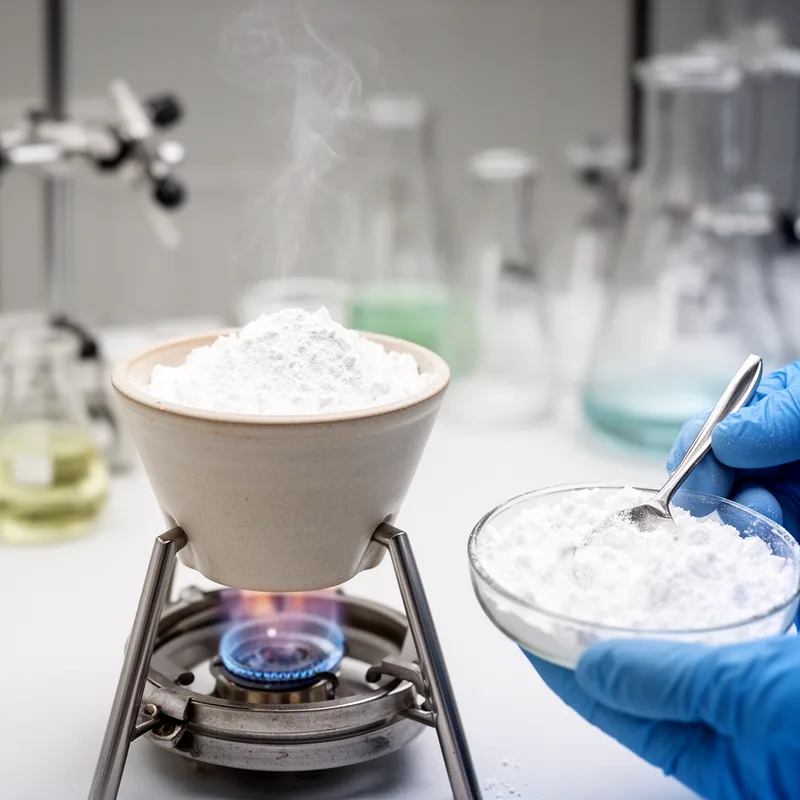
- The chemist explained that calx refers to the oxide formed when metals undergo combustion, especially calcium oxide.
Examples
-
In chemistry, calx is often used as a term for calcium oxide, which is vital in the production of calcium hydroxide.
-
Once it was burned and all its phlogiston released, the object was said to once again exist in its true form, known as a "calx." Beyond basic combustion, the theory also sought to explain chemical processes like the rusting of metals and was even used as a means of understanding breathing, as pure oxygen was described as "dephlogistated air."
Blog text (10) -
Observe him confront the universe by means of ichor, balm, gall, calx—
Fiction book (1991) -
Causeway "paved road" (a Romance word; it has nothing to do with cause: the loss of l in the middle severed the tie between its root and the reflexes of Latin calx "chalk").
Blog text (30) -
Metals that burn and give up harmoniac to the aether become calx, yet their metallic virtues will reappear if charcoal containing sufficient harmoniac is supplied.
Fiction book (1991) -
When limestone is heated, it transforms into calx, a white, chalky substance that plays a key role in many chemical reactions.
Synonyms

 14
4.4
14
4.4

A white powder used in building and farming to make soil less acidic
 2
8.3
2
8.3
A white chemical made by heating a type of rock that burns skin and heats up in water
A white solid chemical used in building and industry that makes lime when water is added and gets hot

A white powder made by heating limestone that is used to make lime and in industry

A white powder made by heating limestone that reacts with water

A white, very strong chemical used to make mortar and cement

A white powder used to help melt and clean metals and to make slaked lime

A white powder made by heating limestone, used in building and farming
Surface Forms
Etymology
Calx comes from Latin calx, which meant 'lime' and gave us English words like calcium and calcify. So a calx is the white, chalky 'lime' or oxide left behind when something is heated, and that is why the word now means the white chemical residue used in processes like making calcium hydroxide.