

quicklime
 2
8.3
2
8.3

- noun
- /ˈkwɪklaɪm/
- Specialized
- In addition to changing the pH of the residual, the hydration of the quicklime (absorbing moisture from the residual) causes the quicklime to release heat to the residual.
- quicklime and water
Examples
-
Once the quicklime and residual are thoroughly mixed, the bulking agent and a portion of recycled compost are added and mixed.
Academic text (2002) -
They produce lime slurry from quicklime or hydrated lime.
Academic text (1998) -
Of course, he made all his money selling quicklime on the continent.
-
This decreases the amount of quicklime required to raise the pH to 10.5.
Academic text (2002) -
The temperature increase caused by a predetermined dose of quicklime may be calculated by the following formula.
Academic text (2002) -
Quicklime added to the residual shortens the composting process by increasing the starting temperature through a chemical reaction.
Academic text (2002) -
The quicklime elevates pH to more than 10 to promote optimum calcium phosphate formation.
Academic text (1998) -
The use of lime results in the use of excess calcium oxide (quicklime) to offset the effects of hydration to calcium hydroxide.
Academic text (1998) -
Quicklime is often used in the production of calcium hydroxide for industrial applications.
-
When mixed with water, quicklime reacts exothermically to form calcium hydroxide.
Synonyms
 14
4.4
14
4.4
A white powder used in building and farming to make soil less acidic
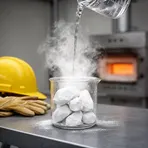
A white solid chemical used in building and industry that makes lime when water is added and gets hot

A white powder made by heating limestone that is used to make lime and in industry

A white powder made by heating limestone that reacts with water

A white, very strong chemical used to make mortar and cement

A white powder made by heating limestone, used in building and farming

A white powder like chalk made from calcium used in chemical processes

A white powder used to help melt and clean metals and to make slaked lime
How Reactive

Surface Forms
Morphology
Etymology
Quicklime combines quick and lime. Here quick does not mean 'fast' but an old word for 'alive', because when you add water the lime seems to 'come alive', hissing and giving off heat, which is why people called it quicklime.