
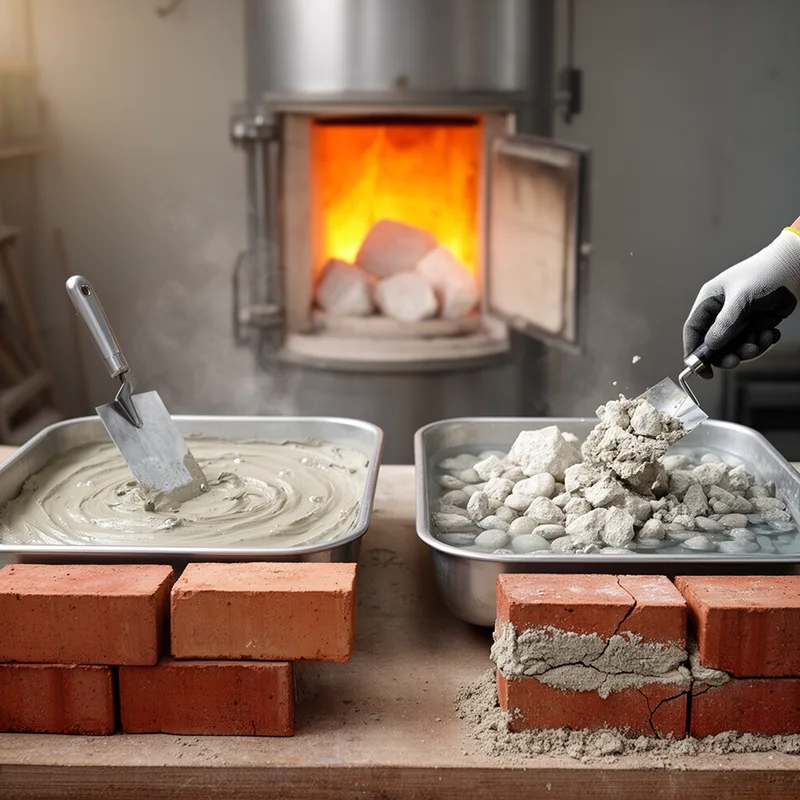
dead-burned lime
- noun
- Specialized
- If you fire limestone too long, you end up with dead-burned lime that won't react properly.
Examples
-
Construction quality suffers when dead-burned lime is accidentally produced instead of reactive quicklime.
-
The construction site used dead-burned lime for the foundation.
-
The chemical industry uses dead-burned lime for certain refractory applications.
-
Why is dead-burned lime less effective in bonding?
-
Using dead-burned lime in mortar leads to a weaker bond in building projects.
-
The manufacturer explained that dead-burned lime can cause structural failures due to its low reactivity.
-
Engineers typically avoid using dead-burned lime in construction because it lacks the necessary bonding strength.
Synonyms
A type of lime heated so much it stops reacting and cannot bind materials

A hard powder made from limestone heated too much that does not react and makes weak mortar
Antonyms


How Reactive

Surface Forms
Morphology
dead-burned + lime
The compound can be partially decoded from its parts: 'dead' (inactive) + 'burned' (subjected to heat) combined with 'lime' suggests lime that has been excessively heated and become inactive. However, the precise technical sense — loss of chemical reactivity and bonding strength — is specialized and not fully predictable for an average B1 learner, so prior subject knowledge or exposure is needed.
Etymology
Dead-burned lime comes from the image of lime so much burned that it is dead, heated until it 'won't react'. That's why the term means lime that 'won't react' and has 'no bonding strength'.