
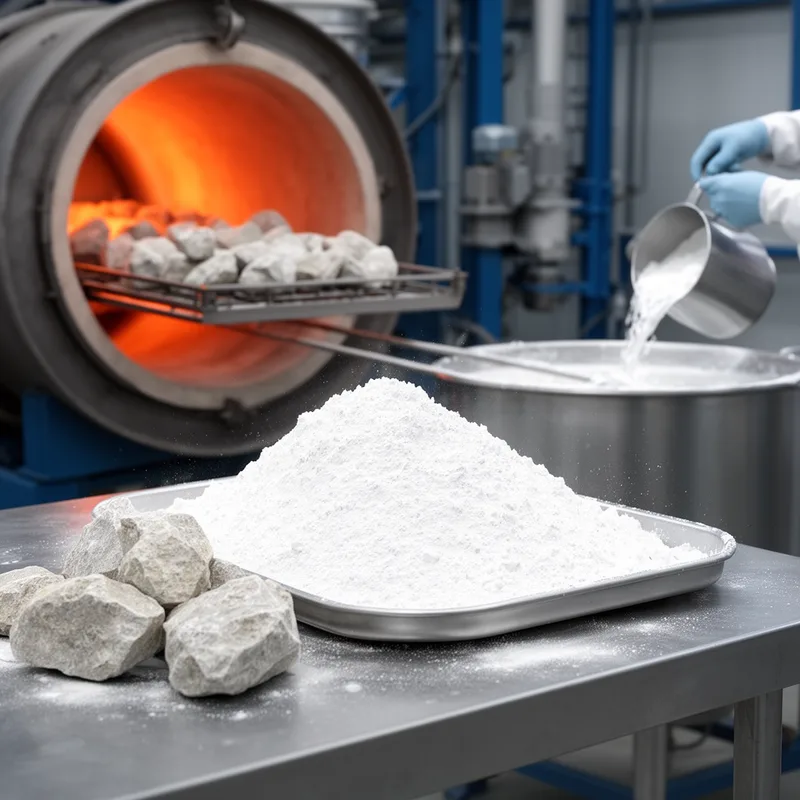
calcined lime
- noun
- /ˈkælˌsaɪnd laɪm/
- Specialized
- After the limestone is heated, it is transformed into calcined lime for use in various industrial processes.
Examples
-
The production process involves adding water to calcined lime to create slaked lime.
-
In the production of calcium hydroxide, calcined lime is mixed with water to initiate the reaction.
-
After the limestone is heated, it is transformed into calcined lime for use in construction.
-
The chemical reaction requires calcined lime as a catalyst to proceed efficiently.
-
The factory produces calcined lime for construction.
-
We need to purchase calcined lime for the project.
-
The construction project requires calcined lime to improve the stability of the foundation.
Synonyms

 14
4.4
14
4.4

A white powder used in building and farming to make soil less acidic
 2
8.3
2
8.3
A white chemical made by heating a type of rock that burns skin and heats up in water
A white solid chemical used in building and industry that makes lime when water is added and gets hot

A white powder made by heating limestone that reacts with water

A white, very strong chemical used to make mortar and cement

A white powder made by heating limestone, used in building and farming

A white powder like chalk made from calcium used in chemical processes

A white powder used to help melt and clean metals and to make slaked lime
Surface Forms
Morphology
The phrase is compositionally formed: 'calcined' (heated/processed by calcination) modifies 'lime', so a learner who knows both constituents can infer it means lime that has been heated/chemically treated. This follows a regular adjective+noun pattern and is therefore directly derivable from the parts.
Etymology
The name calcined lime gives a simple picture: calcined comes from a word meaning 'heated until changed' and lime is the white material made from limestone. People make it by heating limestone until it becomes a dry white powder, so the name simply means 'lime that has been heated'.