

burnt lime
- noun
- /bɜrnt laɪm/
- Specialized
- Contact with water causes burnt lime to react violently, producing heat and calcium hydroxide.
Examples
-
The workers used burnt lime to prepare mortar for the ancient stone walls.
-
The construction workers used burnt lime to strengthen the concrete.
-
Large quantities of burnt lime are needed in the steel manufacturing process.
-
What is burnt lime used for?
-
In construction, burnt lime is commonly mixed with other materials to create durable mortar.
-
Farmers often use burnt lime to improve soil quality and control acidity.
-
The chemical reaction of burnt lime with water generates significant heat, making it useful in various industrial applications.
Synonyms

 14
4.4
14
4.4

A white powder used in building and farming to make soil less acidic
 2
8.3
2
8.3
A white chemical made by heating a type of rock that burns skin and heats up in water
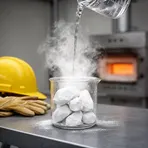
A white solid chemical used in building and industry that makes lime when water is added and gets hot

A white powder made by heating limestone that is used to make lime and in industry

A white powder made by heating limestone, used in building and farming

A white, very strong chemical used to make mortar and cement

A white powder like chalk made from calcium used in chemical processes

A white powder used to help melt and clean metals and to make slaked lime
Surface Forms
Morphology
The meaning is directly compositional: 'burnt' = heated/subjected to fire and 'lime' = the alkaline building chemical, so 'burnt lime' denotes lime produced or altered by heating (quicklime). This formation is predictable and cross-linguistically common, so a B1 learner who knows both constituents can infer the MWE's meaning.
Etymology
Burnt lime comes from the simple picture of making it: people 'burn' or heat a white rock called limestone until it turns into a dry powder, so the words burnt and lime mean the lime made by burning. That's why burnt lime today means the white material used in mortar and cement that makes heat when mixed with water.