
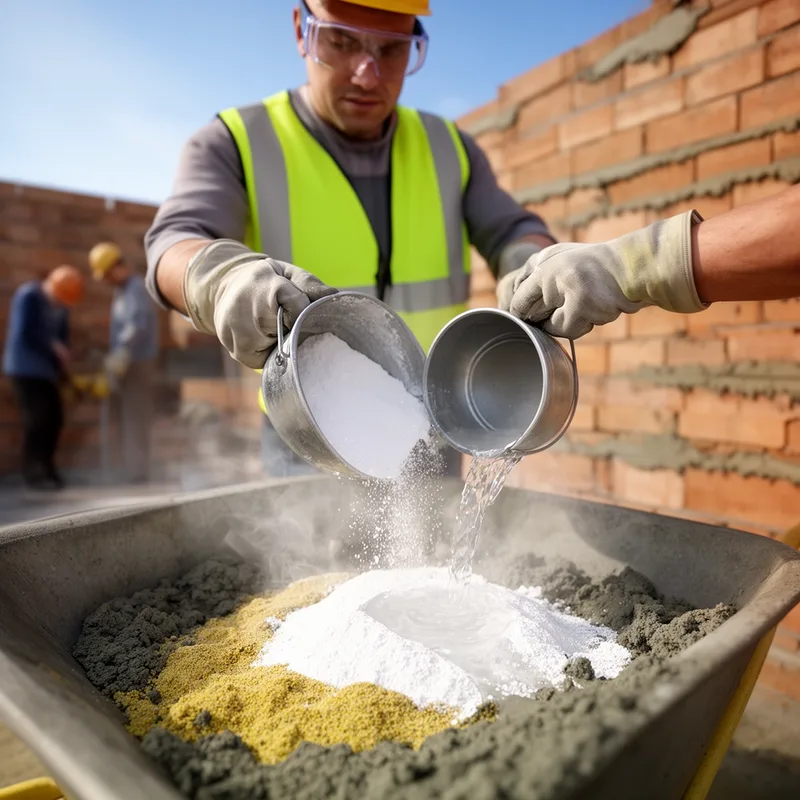
unslaked lime
- noun
- /ʌnˈsleɪkd laɪm/
- Specialized
- To prepare mortar, architects often mix unslaked lime with sand and water.
Examples
-
The workers handled the unslaked lime with care, wearing protective gloves and goggles.
-
The construction workers used unslaked lime for the mortar.
-
Unslaked lime reacts violently with water, producing heat and forming slaked lime.
-
Are you familiar with unslaked lime?
-
Unslaked lime reacts violently with water, producing slaked lime and releasing heat.
-
The workers handled the unslaked lime carefully, using gloves and goggles for safety.
-
To make strong mortar, builders often combine unslaked lime with water and sand.
Synonyms

 14
4.4
14
4.4

A white powder used in building and farming to make soil less acidic
 2
8.3
2
8.3
A white chemical made by heating a type of rock that burns skin and heats up in water

A white powder made by heating limestone that reacts with water

A white powder made by heating limestone that is used to make lime and in industry
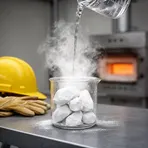
A white solid chemical used in building and industry that makes lime when water is added and gets hot

A white powder made by heating limestone, used in building and farming

A white powder used to help melt and clean metals and to make slaked lime

A white powder like chalk made from calcium used in chemical processes
Surface Forms
Morphology
The noun phrase is fully compositional: 'unslaked' means not mixed with water (not slaked) and 'lime' refers to quicklime/calcium oxide, so together they denote lime that has not been slaked (i.e., calcium oxide). This adjective + noun combination follows ordinary English composition and is predictable for a learner who knows both constituents.
Etymology
Unslaked lime is dry lime that has not been slaked, which means 'mixed with water'. When water touches it, it heats up and can burn, so the name explains why it is dangerous and must be handled carefully in building work.