

caustic
 8
7.6
8
7.6

- adjective
- /ˈkɔːstɪk/
- Specialized
- Sorsby and Symons found that patients with caustic burns of the conjunctiva with corneal involvement could be treated successfully using amniotic membranes.
- caustic soda
- caustic solution
- caustic soda and water
Examples
-
It's, uh... very caustic in its purest form.
-
Part of the bleaching sequence involves using caustic to remove the chlorine from the pulp.
Academic text (1996) -
From all my reading on acids and caustic materials, they all refer to the pH of a product.
Blog text (18) -
What you're feeling is a caustic agent... being applied directly to a nerve.
-
Its chemical-resistant composition makes it suitable for applications where caustic gases are used.
Academic text (1995) -
Plants and animals dissolve in a caustic solution more readily than in an acidic solution.
Blog text (31) -
The superficial veins become sclerosed either from infections or from the caustic effect of the material being injected.
Academic text (1996) -
Of the patients with gastrointestinal symptoms from exposure to the caustic soda water, approximately 28 percent were diagnosed with gastritis or enteritis.
Academic text (1998) -
The scientists warned that the chemical spill released a caustic substance that could harm wildlife.
-
After accidentally touching the caustic cleaner, he quickly rinsed his hands to avoid a chemical burn.
Synonyms
 14
6.6
14
6.6
Able to eat away materials by a chemical reaction, for example strong acids
 1
6.4
1
6.4
A thing that slowly wears something away by wind, water, or chemicals

A very strong acid that can burn skin and metal
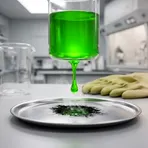
Able to eat away materials by chemical action like a strong acid
Antonyms


Compounds

- Specialized

 1
7.0
1
7.0
A strong chemical used to make soap and fertilizers that can burn your skin


- UK
1
6.1
A very strong chemical that can burn skin and is used to make soap and clean things


How Corrosive

Surface Forms
Morphology
caustic = caust + ic
The adjective is formed with the Greek combining form 'caust-' + '-ic'; because 'caust-' is not a standalone English word, average learners will not reliably infer 'able to burn' from the morphemes.
Etymology
Caustic comes from the Greek root kaustos meaning 'burning'. We call a substance caustic when it can 'burn' or eat away organic tissue, which shows how the original meaning connects to the modern use.