
vitriolic
- adjective
- /ˌvɪtrɪˈɒlɪk/
- Specialized
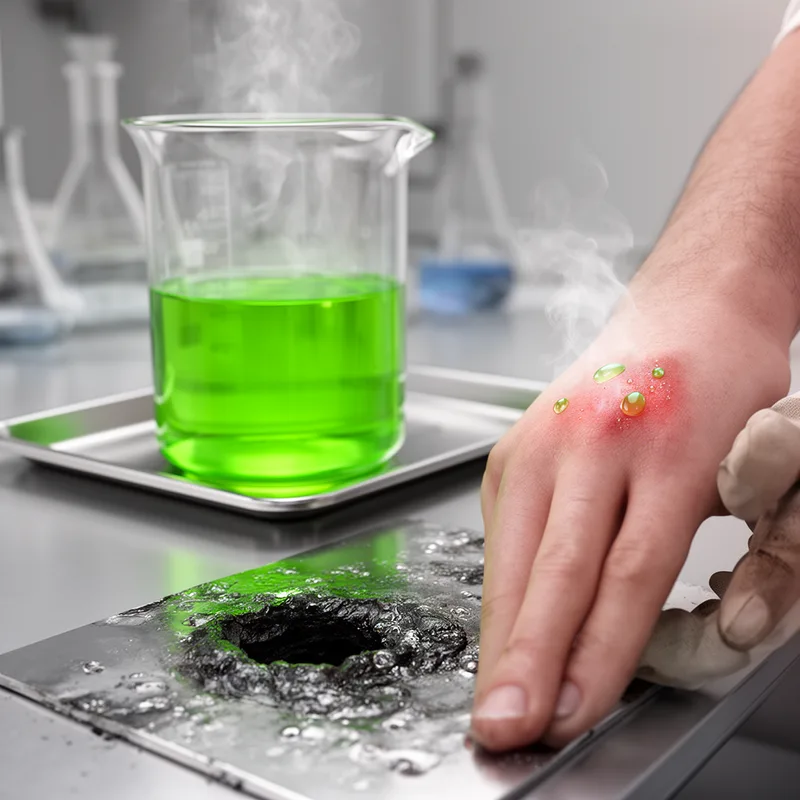
- Over time, the vitriolic acid ate through the metal container.
Examples
-
The scientist warned that the vitriolic solution could damage skin upon contact.
-
The vitriolic acid burned through the metal container.
-
Laboratory safety protocols require special handling of vitriolic chemicals.
-
You should handle vitriolic substances with care.
-
The vitriolic acid burned through the metal container, leaving a dangerous residue.
-
In the lab, scientists must handle vitriolic substances with extreme caution to avoid chemical burns.
-
The worker spilled vitriolic liquid on the floor, requiring immediate cleanup to prevent injuries.
Synonyms

 14
6.6
14
6.6

Able to eat away materials by a chemical reaction, for example strong acids
 8
7.6
8
7.6
Able to burn or damage skin
 1
6.4
1
6.4
A thing that slowly wears something away by wind, water, or chemicals
Able to eat away materials by chemical action like a strong acid
Antonyms


Compounds

How Corrosive

Surface Forms
Morphology
Etymology
The word vitriolic comes from vitriol, an old name for glassy crystals used to make a very strong acid. Because that acid 'burns' and eats things away, vitriolic is used for substances that are highly 'corrosive' and can damage tissue.