

blood disorder
 5
3.5
5
3.5

- noun
- /blʌd dɪsˈɔrdər/
- I also had a blood disorder called disseminated intravascular coagulation, which is sometimes brought on by prostate cancer.
Examples
-
For example, it is widely thought that itching of the skin is commonly caused by a blood disorder of some sort.
Academic text (2010) -
For chronic diagnoses, such as blood disorders, the child must come to the clinic every month for transfusions.
Blog text (22) -
And they... they thought she had some kind of a blood disorder.
-
I think it's some kind of blood disorder.
-
Other blood disorders can also be the reason for this form.
Blog text (28) -
- She's got a blood disorder.
-
This showed itself the other day when a thirteen-year-old boy with a chronic blood disorder came in.
Blog text (22) -
The center's work focuses on protecting people who are especially vulnerable to health risks: babies, children, people with blood disorders, and people with disabilities.
Blog text (29) -
For example, a three-year-old former RC client suffering from a rare blood disorder and speech delay was placed on the waitlist for Head Start.
Academic text (2010) -
Sickle cell disease is an inherited blood disorder passed from parents to their children.
Synonyms
 109
4.6
109
4.6
A serious cancer that makes too many abnormal white blood cells
 37
3.6
37
3.6
A blood problem in which there are too few red blood cells, causing tiredness and weakness
 8
7.0
8
7.0
A condition in which bone marrow does not make enough red and white blood cells and platelets
 7
6.7
7
6.7
A condition you are born with where blood keeps bleeding after a cut
 4
2.8
4
2.8
A condition that affects the blood or its cells
 3
4.1
3
4.1
An inherited blood illness in which red blood cells become crescent shaped, causing low red blood cell count and pain
 2
5.4
2
5.4
A condition causing too few red blood cells because they break down fast
 2
3.6
2
3.6
A serious illness when germs get into the blood and make you very ill
 1
3.4
1
3.4
A blood condition passed from parents that makes red blood cells crescent-shaped and causes pain
 1
9.9
1
9.9
A blood condition with too many red blood cells that makes the blood thicker and causes health problems
 1
9.9
1
9.9
A serious disease where the bone marrow becomes scarred and makes fewer blood cells
 1
9.9
1
9.9
A blood problem where blood cannot carry enough oxygen to the body
 1
9.3
1
9.3
A higher than normal number of white blood cells in the blood


 1
3.8
1
3.8
A disease in which the body makes too many white blood cells
 1
9.9
1
9.9
A blood disease with too many young red blood cells
An abnormal change in the blood that affects how it works

A blood disorder where red blood cells have abnormal hemoglobin

A cancer of the blood that makes too many white blood cells

A cancer that makes too many young white blood cells

A blood condition with red blood cells that are paler because they have less hemoglobin

A condition in which red blood cells contain more hemoglobin than normal

A blood illness passed from parents that causes low red blood cells
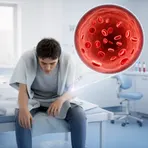
A low number of red blood cells that often makes you feel tired

Too much hemoglobin in the liquid part of blood

An inherited condition where a missing blood protein makes bleeding last longer, mainly in boys and men

A rare inherited blood condition in which blood does not stop bleeding easily

A condition where blood does not clot, causing heavy bleeding, often in boys and passed from the mother
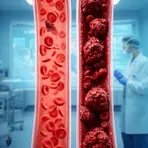
A condition in which blood forms clots more easily
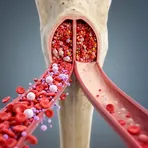
A large drop in all types of blood cells when bone marrow cannot make them
How Severe

Surface Forms
Morphology
The meaning 'a disease that affects the blood' is directly and predictably derived from combining 'blood' (the bodily fluid) with 'disorder' (a medical condition). This modifier–head noun composition follows a common and cross-linguistically transparent pattern, so a B1 learner who knows both constituents will readily infer the MWE's meaning.
Etymology
Blood disorder is a compound noun made from blood, meaning the body's red fluid, and disorder, meaning something 'not in order'. So, it names a 'disease' that affects the blood, like anemia or hemophilia.