

erythroblastosis


 1
9.9
1
9.9
- noun
- /ˌɛrɪθroʊblæˈstoʊsɪs/
- Specialized
 :
eritroblastosis
:
eritroblastosis
- Treatment options for erythroblastosis depend on the severity of the disease.
Examples
-
The newborn was diagnosed with erythroblastosis shortly after birth.
-
Doctors monitor high-risk pregnancies for signs of erythroblastosis.
-
The baby was diagnosed with erythroblastosis shortly after birth.
-
Doctors are studying the effects of erythroblastosis on infants.
-
If untreated, erythroblastosis can lead to severe anemia in the newborn.
-
Doctors often perform tests to diagnose erythroblastosis during pregnancy.
-
New treatments for erythroblastosis have improved outcomes for affected infants.
Synonyms
 5
3.5
5
3.5
A health problem that affects the blood, like anemia or leukemia
 4
2.8
4
2.8
A condition that affects the blood or its cells
Compounds

- Specialized
1
8.9
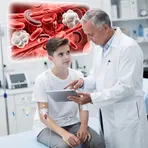
A serious newborn blood condition when the mother's body attacks the baby's red cells because of different blood types
Surface Forms
Morphology
erythroblastosis = erythroblast (opaque) = erythro + blast + osis
A technical medical term built from specialized combining forms ('erythro-' and 'blast') with the disease suffix '-osis', so the meaning is not predictable to a general B1 learner.
Etymology
Erythroblastosis comes from three parts: erythro- meaning 'red', blast meaning 'young cell', and -osis meaning 'a condition'. So it literally describes a condition with too many young red cells in the blood.