
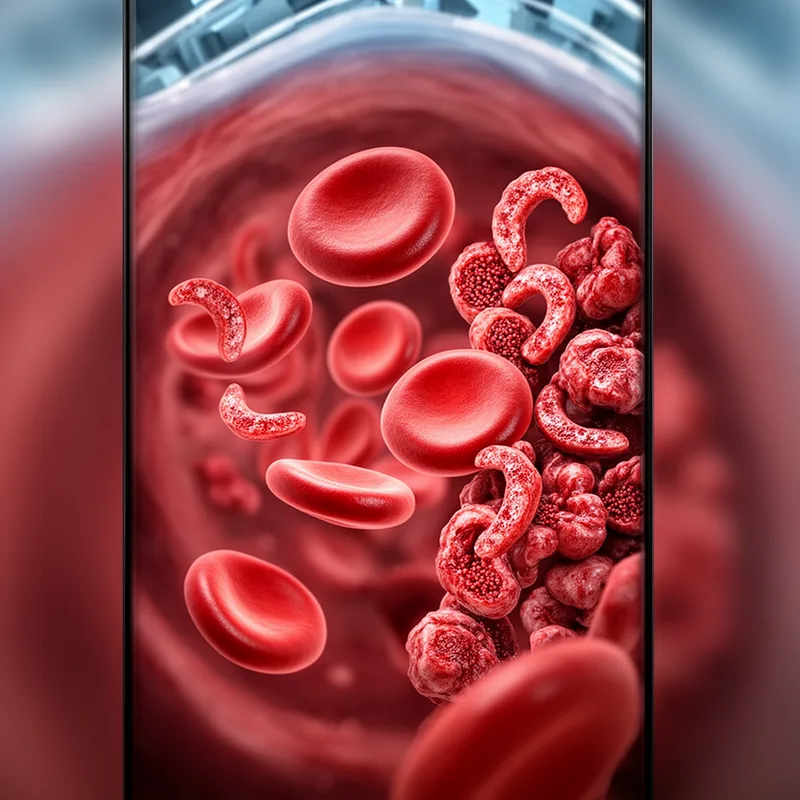
hemoglobinopathy
- noun
- /ˌhɛməˌɡloʊbɪˈnɑpəθi/
- Specialized
- Genetic testing can help identify specific types of hemoglobinopathy in affected individuals.
Examples
-
Doctors often diagnose patients with a hemoglobinopathy when they show symptoms related to abnormal hemoglobin levels.
-
A stronger emphasis on hemoglobinopathy disorders in health care education programs would encourage a greater understanding of SCD in future generations of health care.
Academic text (2008) -
Active group membership was operationalized as having attended at least one group meeting during the past year, requesting voluntary inclusion on the group's roster, and having been formally diagnosed with SCD or a related hemoglobinopathy.
Academic text (2000) -
Sickle cell disease is one type of hemoglobinopathy that affects red blood cell shape and function.
Synonyms
 3
4.1
3
4.1

An inherited blood illness in which red blood cells become crescent shaped, causing low red blood cell count and pain
 2
9.9
2
9.9
An inherited blood disease that causes low levels of red blood cells
 1
3.4
1
3.4
A blood condition passed from parents that makes red blood cells crescent-shaped and causes pain
 1
9.9
1
9.9
A blood problem where blood cannot carry enough oxygen to the body

A blood illness passed from parents that causes low red blood cells
Surface Forms
Morphology
hemoglobinopathy = hemoglobin (semi-transparent) = hemo + globin + opathy
The word is built in a regular medical pattern from 'hemoglobin' plus '-opathy' meaning disease, but the result is a specialized technical term.
Etymology
The word hemoglobinopathy breaks into parts: hemo- meaning 'blood', globin the protein found in red blood cells, and -pathy meaning 'disease'. So a hemoglobinopathy is simply a 'disease of the hemoglobin', which explains why it refers to blood disorders with abnormal hemoglobin.