

Chinese lacquer tree
- noun
- The Chinese lacquer tree is cultivated for its valuable sap used in traditional lacquerware.
Examples
-
Workers carefully collect sap from the Chinese lacquer tree, wearing protective gear because it is toxic.
-
Lacquerware artisans value the Chinese lacquer tree for the quality of its natural resin.
-
The Chinese lacquer tree is known for its toxic sap.
-
Many Chinese lacquer trees grow in Japan.
-
Artisans around the world appreciate the Chinese lacquer tree for its toxic sap, which is essential for making durable lacquer products.
-
In rural Japan, the Chinese lacquer tree is carefully tended to ensure a plentiful harvest of its resin.
-
The Chinese lacquer tree produces a sap that, while toxic, is prized for its use in traditional lacquer crafts.
Synonyms

A small Asian tree that makes a poisonous sap used to make lacquer

A small Asian tree whose sap makes a hard shiny finish for wood and can cause skin allergy
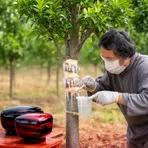
A small Asian tree that gives a poisonous sap used to make a hard shiny finish

A small East Asian tree that makes a poisonous sap used for lacquer

A small Asian tree whose sap can cause a skin rash and is used to make lacquer

A small Asian tree that gives a poisonous sap used to make lacquer

A small tree from East Asia that loses its leaves and has toxic sap used to make lacquer
Surface Forms
Morphology
Each constituent contributes directly and compositionally: 'Chinese' specifies origin, 'lacquer' names the substance, and 'tree' denotes a plant, so the phrase denotes a tree associated with lacquer (one that produces or is used for lacquer). This literal, compositional structure is cross-linguistically common and therefore readily inferable by a B1 learner who knows the constituent words.
Etymology
Chinese lacquer tree is a small tree from Asia that gives a thick, shiny but poisonous 'sap'. Workers collect that 'sap' and use it to make lacquer, so the name shows it is the tree that gives the lacquer.

