
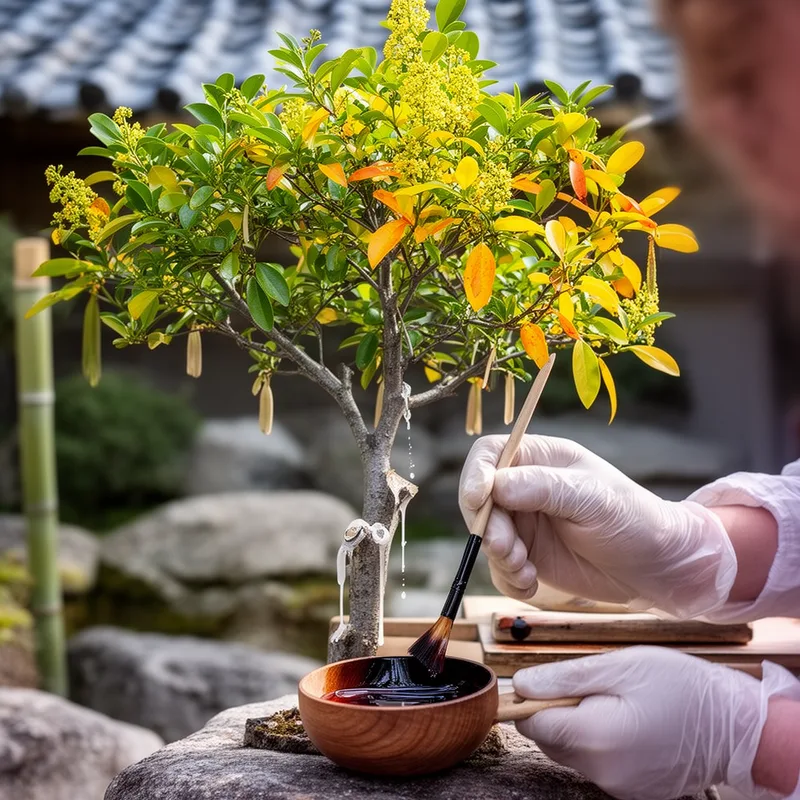
Japanese varnish tree
- noun
- With its toxic sap, the Japanese varnish tree is also historically significant for producing traditional lacquer.
Examples
-
The Japanese varnish tree is prized for its attractive foliage and unique seed pods.
-
The Japanese varnish tree blooms in early summer, displaying delicate yellow-green flowers.
-
Many gardeners plant the Japanese varnish tree to add a touch of elegance to their landscapes.
-
The Japanese varnish tree is known for its beautiful foliage.
-
Many gardeners appreciate the Japanese varnish tree for its ornamental value.
-
Gardening enthusiasts often choose the Japanese varnish tree for its striking appearance in ornamental gardens.
-
The Japanese varnish tree is valued in landscaping due to its lush foliage and unique shape.
Synonyms

A small Asian tree whose sap makes a hard shiny finish for wood and can cause skin allergy

A small Asian tree that makes a poisonous sap used to make lacquer

A small East Asian tree that makes a poisonous sap used for lacquer
A small Asian tree that gives a poisonous sap used to make a hard shiny finish

A small Asian tree whose sap can cause a skin rash and is used to make lacquer

A small Asian tree that gives a poisonous sap used to make lacquer

A small tree from China and Japan that makes a poisonous sap used to make a hard shiny coating
Surface Forms
Morphology
The meaning is compositionally derivable: 'Japanese' indicates origin, 'varnish' links the plant to lacquer/varnish, and 'tree' names the plant type. A B1 learner who knows these words can reasonably infer this refers to a tree (from Japan/East Asia) associated with varnish-producing sap, so the phrase is transparently built from its constituents.
Etymology
The noun Japanese varnish tree comes from the tree's sticky sap. People in East Asia used that sap to make a strong varnish called 'lacquer', so the name points to that old use.

