

Rhus verniciflua
- noun
- Specialized
- The sap of Rhus verniciflua is traditionally used in East Asia to make lacquerware.
Examples
-
Painters prized the high-gloss finish created with Rhus verniciflua resin.
-
Contact with Rhus verniciflua can cause allergic reactions in some people.
-
The Rhus verniciflua tree is known for its toxic sap.
-
Many artisans prefer using Rhus verniciflua for traditional lacquer.
-
The sap of Rhus verniciflua is traditionally used in East Asia to make lacquerware.
-
Painters prized the high-gloss finish created with Rhus verniciflua resin.
-
Many artisans prefer using Rhus verniciflua for traditional lacquer.
Synonyms

A small Asian tree that makes a poisonous sap used to make lacquer

A small Asian tree whose sap can cause a skin rash and is used to make lacquer

A small East Asian tree that makes a poisonous sap used for lacquer
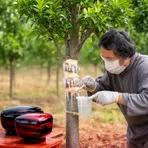
A small Asian tree that gives a poisonous sap used to make a hard shiny finish

A small tree from China and Japan that makes a poisonous sap used to make a hard shiny coating

A small Asian tree that gives a poisonous sap used to make lacquer

A small tree from East Asia that loses its leaves and has toxic sap used to make lacquer
Surface Forms
Morphology
Rhus + verniciflua
This is a scientific Latin binomial rather than a compositional English phrase; the second element 'verniciflua' is not an English word and carries specialist botanical/Latin morphology so a B1 learner cannot derive the meaning 'a tree whose sap produces lacquer' from the parts. Binomial names are lexicalized taxonomic labels and thus require domain-specific knowledge rather than simple composition, making the expression opaque to learners.
Etymology
Rhus verniciflua names a small Asian tree known for its thick, oily sap. People used that sap to make a hard, shiny coating called 'lacquer', and because the sap can cause skin reactions the tree is remembered for both its shiny finish and the danger of touch.

