

Japanese lacquer tree
- noun
- Because the sap of the Japanese lacquer tree is toxic, it must be handled with care.
Examples
-
Artisans have used the Japanese lacquer tree for centuries to create exquisite lacquerware.
-
The Japanese lacquer tree is known for its toxic sap.
-
The Japanese lacquer tree is cultivated for its valuable resin used in traditional crafts.
-
Many artisans use the sap from the Japanese lacquer tree for their crafts.
-
The Japanese lacquer tree produces a toxic sap that is used to create traditional lacquerware.
-
Artisans often use the sap from the Japanese lacquer tree to finish beautiful antique furniture.
-
Harvesting the sap from a Japanese lacquer tree requires careful handling due to its toxic properties.
Synonyms

A small Asian tree whose sap makes a hard shiny finish for wood and can cause skin allergy

A small Asian tree that makes a poisonous sap used to make lacquer
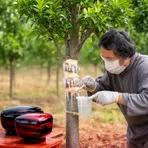
A small Asian tree that gives a poisonous sap used to make a hard shiny finish

A small Asian tree whose sap can cause a skin rash and is used to make lacquer

A small Asian tree that gives a poisonous sap used to make lacquer

A small tree from China and Japan that makes a poisonous sap used to make a hard shiny coating

A small tree from East Asia that loses its leaves and has toxic sap used to make lacquer
Surface Forms
Morphology
This noun phrase is fully compositional: 'Japanese' specifies origin, 'lacquer' names the substance, and 'tree' denotes the plant, so a learner who knows those words can infer it is a tree associated with lacquer (i.e., one that yields or is used for lacquer). The construction follows a common language pattern (substance + tree, and nationality + noun) and is therefore immediately understandable to a B1 learner who knows the constituents.
Etymology
Japanese lacquer tree gets its name from the sticky, toxic sap the tree makes. Makers spread this sap in thin layers to make the shiny, hard finish called lacquer, so the name shows the tree is the source of that material.

