

varnish tree
- noun
- Indian
- Traditional Japanese lacquerware is made using resin from the varnish tree.
Examples
-
The sap of the varnish tree is carefully collected by skilled artisans in Asia.
-
Many artisans use the sap from the varnish tree to create lacquer.
-
Contact with a varnish tree can cause severe skin irritation due to its toxic exudate.
-
The varnish tree is known for its toxic sap.
-
The sap of the varnish tree is used to make traditional lacquer in Asia, known for its durability.
-
Skilled artisans harvest the toxic sap from the varnish tree to create beautiful lacquerware.
-
Contact with a varnish tree can lead to harmful reactions, highlighting the need for caution when working with its sap.
Synonyms

A small Asian tree whose sap makes a hard shiny finish for wood and can cause skin allergy

A small Asian tree that makes a poisonous sap used to make lacquer
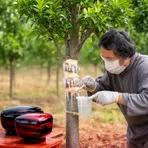
A small Asian tree that gives a poisonous sap used to make a hard shiny finish

A small Asian tree whose sap can cause a skin rash and is used to make lacquer

A small East Asian tree that makes a poisonous sap used for lacquer

A small tree from China and Japan that makes a poisonous sap used to make a hard shiny coating

A small tree from East Asia that loses its leaves and has toxic sap used to make lacquer
Surface Forms
Morphology
varnish + tree
This is a straightforward modifier+noun compound: 'varnish' names the product and 'tree' names the plant, so a learner who knows 'varnish' (a coating/oil) and 'tree' can infer it is a tree associated with varnish (i.e., a tree whose nuts/oil yield varnish). The compositional pattern is common cross-linguistically for product+tree names and thus is immediately derivable from the parts.
Etymology
The noun varnish tree comes from the tree's sticky, poisonous sap that artisans used to make varnish, and the sap can burn the skin so collectors handled the tree very carefully. That's why the name links the tree to the 'varnish' it produces.

