

warfare
 166
5.3
166
5.3

- noun
- /ˈwɔrˌfɛr/
- Modern warfare often includes advanced technology and strategies that change how battles are fought.
- modern warfare
- conventional warfare
- guerrilla warfare
Loading YouTube…
Watch on YouTubeBecause these they're gangs, you know, there's gang warfare that's coming in from the streets.
- Because these they're gangs, you know, there's gang warfare that's coming in from the streets.
- And the nature of warfare is changing.
- We're waiting for, you know, atomic warfare and nuclear winter.
- And when he got there, his entire people were gone from warfare and disease.
- You see a lot of evidence for warfare in these paintings.
- I mean, I really recommend people read World War One Warfare in detail.
- But then it became, you know, gangs looting and and sort of gang warfare type thing, kidnapping.
- Remember too, that count is indeed writing after centuries of religious warfare in in Europe.
Examples
-
It is no surprise then that constant warfare was the norm.
-
In the important field of submarine warfare, Germany found a safe haven in Finland.
Academic text (1999) -
I believe that the warfare in the world is changing.
-
And the nature of warfare is changing.
-
What do you think the future of warfare looks like?
-
And then you have decades of intense warfare taking place.
-
The latest design, the last word in modern warfare.
-
So this cyber warfare is is going on.
-
Cyber warfare is definitely the future of warfare.
-
By 1916, after two grisly years of trench warfare... the battle lines had changed very little.
Synonyms
 ∞
1.0
∞
1.0
A period when countries or groups fight with weapons and violence
 854
3.5
854
3.5
A fight between soldiers or armed groups in a war
 514
2.7
514
2.7
A violent fight between armed groups in a war
 415
6.9
415
6.9
Fighting between soldiers in a war
 1
7.9
1
7.9
The act of fighting in a war


 1
7.4
1
7.4
Fighting between two countries or groups during a war
 1
4.9
1
4.9
A fight between soldiers or military groups using weapons
Compounds


- Specialized
12
5.6
The use of poisonous chemicals as weapons to kill or hurt people
- NSFW
10
6.1
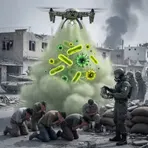
Using germs or poisons as weapons to harm people, animals and plants and contaminate food and water

- Specialized
8
7.0
To use false information, threats, and messages to make an enemy feel afraid and weak in war and politics
 8
5.5
8
5.5
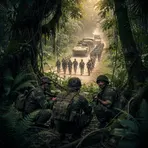
Fighting by small mobile groups using hit-and-run attacks against larger armies in enemy territory
- Specialized
2
6.7
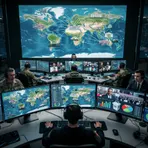
To use information and computers to gain an advantage in war or politics
- Specialized
2
6.5
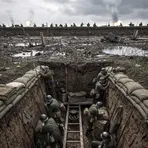
A way of fighting where soldiers attack, defend, and live in long trenches facing each other
- Specialized
1
7.7
Military use of radio and other signals to find, block, or confuse enemy equipment

- Formal
1
7.0
A part of the navy that carries out secret, dangerous missions at sea and on land


- Specialized
Actions and plans to protect people and places from attacks using harmful germs
- Specialized
Actions that use electronic signals to find enemy radar or radio and help commanders spot immediate threats


A main United States Navy group that designs and tests aircraft and missiles
- Formal
A U.S. Navy center that develops and tests weapons and systems for ships

A U.S. Navy agency that gives technical help for submarines and weapons used under the sea
How Intense

Surface Forms
Morphology
Etymology
Warfare combines war and fare, where fare once meant 'a way of going' or 'how things go'. So warfare originally meant 'the way war is done', which is why it refers to the methods and fighting used in a war.