
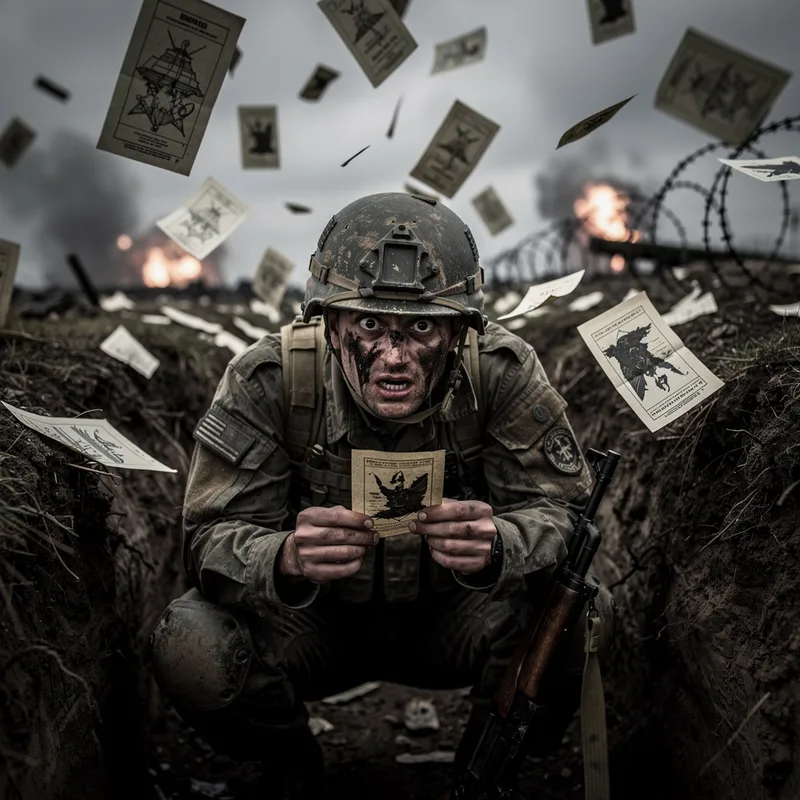
psychological warfare
 8
7.0
8
7.0

- noun
- /ˌsaɪkəˈlɒdʒɪkəl ˈwɔːrˌfɛr/
- Specialized
- The military used psychological warfare to demoralize the enemy troops.
- psychological warfare specialist
Loading YouTube…
Watch on YouTubeSo what he's done is he's waged psychological warfare on the United States.
- So what he's done is he's waged psychological warfare on the United States.
- You mess with Russia, you get not just pain, but you get psychological warfare as well.
- He did a lot of work on exposing this type of world domination through psychological warfare.
- That is a game being played that that is psychological warfare pretty much.
- And more importantly, I risk violence or abuse or psychological warfare if I was to express my needs.
Examples
-
There is little evidence that the IDF uses their psychological-warfare specialists.
Academic text (1991) -
So what he's done is he's waged psychological warfare on the United States.
-
You mess with Russia, you get not just pain, but you get psychological warfare as well.
-
You ran the CIA, you know psychological warfare when you see it.
-
You're a master of psychological warfare!
-
Yeah, I've learned a lot about the psychological warfare in Ukraine.
-
Coming out of World War II, U.S. psychological warfare operatives knew they could turn their skills to political purposes.
Blog text (1) -
We believe that the Chinese Communist Party is engaged in psychological warfare through TikTok to deliberately influence US children.
-
They are the usual moves in the conduct of psychological warfare by a defeated enemy.
Academic text (1993) -
If Islamist theology provides the moral inspiration for the strategy of terrorism, psychological warfare helps secure its benefits in practice.
Academic text (2008)
Synonyms
 2
7.8
2
7.8
A contest using pressure and fear to weaken the other side without physical fighting

The use of words and actions to change what people think or do
How Aggressive
- Specialized
8
7.0

- Specialized
2
8.4
291
6.2
Surface Forms
Morphology
The meaning is directly compositional: 'psychological' (relating to the mind or mental processes) combined with 'warfare' (methods or tactics of war) clearly yields tactics aimed at influencing or undermining an opponent's mind. This pattern is cross-linguistically parallel and follows standard noun–noun compounding, so a B1 learner who knows both words should be able to infer the MWE meaning.
Etymology
Psychological warfare paints a picture of a fight that uses the mind rather than guns, with Psychological showing the mind part and warfare the battle part. People send scary messages, rumours or lies to make the other side lose confidence, so that's why the phrase means using ideas and fear to 'weaken' or 'influence' an opponent.