
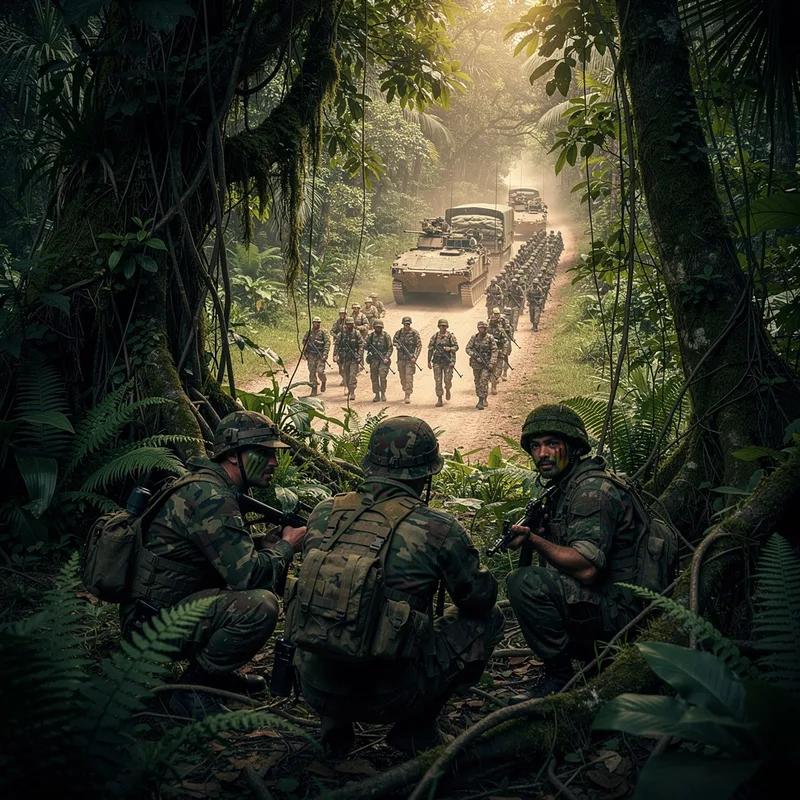
guerrilla warfare
 8
5.5
8
5.5

- noun
- /ɡəˈrɪlə ˈwɔrˌfɛr/
- They taught us how to survive, how to improvise, and how to conduct guerrilla warfare.
- guerrilla warfare expert
- urban guerrilla warfare
- guerrilla warfare and terrorism
Loading YouTube…
Watch on YouTubeWhat are what are some of the targets that you're going after using guerrilla warfare?
- What are what are some of the targets that you're going after using guerrilla warfare?
- This is the conundrum of, you know, guerrilla warfare, right?
Examples
-
Initially, they formed insurgent groups to wage guerrilla warfare for as long as seven years.
Academic text (1999) -
Importantly, foreign volunteers also provide training in guerrilla warfare.
Academic text (2007) -
This is guerrilla warfare, and they can come at you from anywhere, at any time.
-
Taught me some guerrilla warfare techniques that can come in handy in this kind of situation.
-
And if they encountered difficulties, they would disappear into the mountains to conduct guerrilla warfare.
-
The Cuna reacted to Spanish pressure with ferocious guerrilla warfare.
Academic text (1991) -
The Kosovo Albanian majority chafed under Serbian rule and fought back with guerrilla warfare tactics.
Academic text (2001) -
In guerrilla warfare, you try to use your weaknesses as strengths.
-
The Kosovo Albanian majority chafed under Serbian rule and fought back with guerrilla warfare tactics.
-
They taught us how to survive, how to improvise, and how to conduct guerrilla warfare.
Synonyms
 54
8.4
54
8.4
A planned action by a group, often using weapons or secret actions, to take control from the government
Surface Forms
Morphology
The meaning of 'guerrilla warfare' is directly compositional: combining 'guerrilla' (fighters using unconventional tactics) with 'warfare' (methods of war) yields warfare conducted by guerrillas. This noun+noun compound follows a clear semantic logic found across many languages, so a B1 learner who knows both constituents would readily infer the MWE meaning.
Etymology
Guerrilla warfare comes from Spanish: the part guerrilla originally meant a 'small war' and the part warfare means 'fighting'. The image of small bands hiding in the countryside and making surprise hit-and-run attacks explains why guerrilla warfare means fighting with small, mobile groups rather than a big army.