
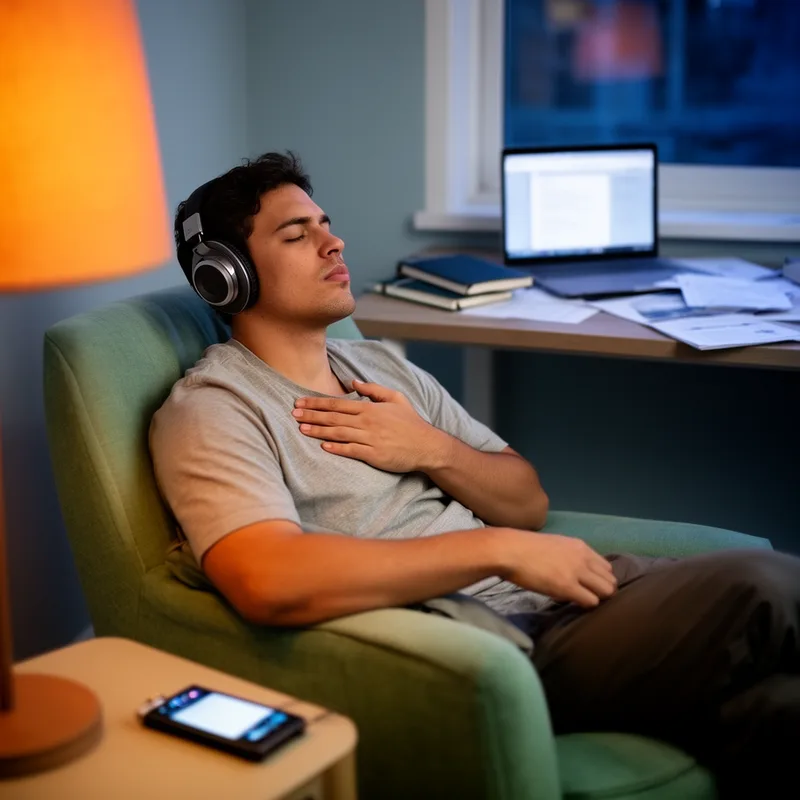
to unstress
- verb
- /ʌnˈstrɛs/
- He found that a short walk outside helped him unstress after work.
Examples
-
Taking deep breaths can help you unstress before an important meeting.
-
After a busy week, she likes to unstress by listening to music in her room.
-
I need to unstress after a long week.
-
She tries to unstress by meditating.
-
After a busy week, she likes to unstress by listening to music in her room.
-
Taking deep breaths can help you unstress before an important meeting.
-
He found that a short walk outside helped him unstress after work.
Synonyms

 ∞
1.0
∞
1.0

To feel less nervous and more calm
 166
2.3
166
2.3
Make pain, stress, or worry less
 35
3.4
35
3.4
Become relaxed and less tense after work or a stressful time
 11
4.2
11
4.2
Relax and become less tense after work or stress
 6
4.9
6
4.9
To remove a heavy load from someone, physical or emotional, often by talking
 5
3.5
5
3.5
To make you feel less tense or worried


 1
3.9
1
3.9
Become relaxed and less tense
 1
5.6
1
5.6
Relax and become less tense or formal
To make muscles or nerves feel less tight after stress

Make a tense person or situation feel more relaxed

To make the body or mind less tense
Antonyms

How Stressed

Surface Forms
Morphology
Etymology
Unstress comes from the parts un- meaning 'not' and stress meaning 'pressure' or 'tension'. So to unstress someone is to take away that pressure and help them feel calm.