

to strike
 553
2.4
553
2.4

- verb
- /straɪk/
- During the storm, lightning struck a nearby tree, causing it to splinter.
- strike a blow
- be struck by lightning
Loading YouTube…
Watch on YouTubeThe second time lightning struck was with Bridget Graham.
- The second time lightning struck was with Bridget Graham.
- No, you have not been struck by lightning.
- No, God will strike you, you stinky coward.
- And when lightning struck that rod, the leg moved.
- It depends on what's on Netflix because our Apple TV was struck by lightning basically.
- The walls had fallen away, and her feet struck a sudden rubble instead of the smooth floor.
Examples
-
He decided to strike the ball with all his might during the final match.
-
And when you strike, strike first and strike to cause the most damage as possible.
-
Obama was ready to strike and then backed off.
-
You're off balance when you strike with your right.
-
The student was injured when struck in the face by a foreign object while using a lathe.
Academic text (2015) -
At that moment, the Turkish cavalry struck the Greeks in the right flank.
-
And the United States would surely begin striking Pakistan even more aggressively if al Qaeda found haven there.
Academic text (2012) -
The workers planned to strike to demand better wages and working conditions.
Synonyms
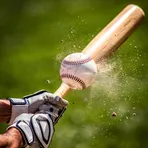 ∞
1.0
∞
1.0
To strike someone or something with force
 937
1.0
937
1.0
To hit something by accident with a sudden movement
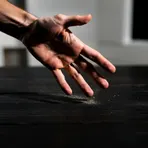 492
1.0
492
1.0
Hit quickly with the flat part of the hand
 455
1.4
455
1.4
To hit someone or something quickly with a closed fist
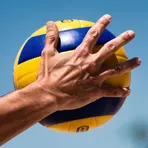 164
3.5
164
3.5
To hit someone or something with an open hand
 83
4.7
83
4.7
To hit someone or something with force and accuracy
 73
2.9
73
2.9
To hit someone or something very hard
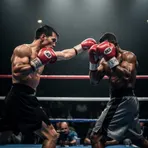 47
2.0
47
2.0
To fight another person using the fists, often as a sport
46
3.4
To hit someone or something quickly and lightly
 46
6.7
46
6.7
Hit something many times, usually with your fists
 38
3.7
38
3.7
Hit something or someone while moving, causing a sudden strong crash
 34
2.5
34
2.5
Hit the ball so it goes where you want
 23
8.8
23
8.8
To hit someone repeatedly with a heavy stick or club
 19
3.3
19
3.3
To poke quickly and sharply with a finger, hand, or object
 16
8.0
16
8.0
To attack violently, upset someone deeply or criticize them strongly
 13
9.8
13
9.8
Hit a person or thing with a heavy blow
 10
4.6
10
4.6
To hit someone or something very hard, often with the fist
 8
5.1
8
5.1
To hit someone or something hard with a heavy stick
 4
7.7
4
7.7
To hit someone or something with a quick strong blow
 4
6.1
4
6.1
To hit someone or something hard with your head
 2
7.3
2
7.3
To hit something or someone very hard
 1
9.9
1
9.9
To hit someone or something hard
 1
8.6
1
8.6
To hit forcefully with the hand or a flat object


 1
7.4
1
7.4
To hit someone or something hard with the fist
 1
9.3
1
9.3
To hit someone or something again and again with your fists
 1
9.5
1
9.5
To hit someone repeatedly and very hard

Hit something suddenly

To hit something very hard with your fist or a bat

To hit someone or something violently, often by running into them
Antonyms

Idioms



- Informal
3
4.7
Do something quickly to use a good chance before it ends


- Informal
To criticize or take advantage of someone when they are weak
Phrasal Verbs



 22
3.8
22
3.8
To start a conversation, friendship, or activity with someone in a quick informal way
















Compounds

 14
3.2
14
3.2
A sudden flash of electricity from the sky that hits something or a sudden strong idea

- Specialized
11
4.4
Area over home plate between a batter's knees and shoulders where a pitch must pass to be called a strike

- NSFW
4
8.6
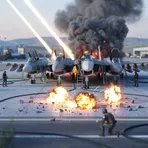
A surprise attack with nuclear weapons to destroy an enemy's ability to fight back

- Specialized
3
5.0
An attack launched early to stop a threat that is about to happen, for example in war or computer attacks

 3
4.7
3
4.7
A person who plans and speaks for workers who stop work for better pay or conditions



- Jargon
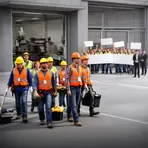
A stoppage of work by workers to make managers follow safety and other workplace rules
- Formal
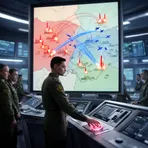
A military action to stop an expected attack by an enemy before it happens


- Specialized
A break in the ground where two rock blocks move past each other horizontally
How Forceful

Surface Forms
Etymology
Strike comes from the old English word strīcan, which meant 'to stroke' or move the hand over something and is related to stroke; from that sudden touch it grew to mean a forceful hit. So to strike someone is to hit them.