

first strike
 3
5.0
3
5.0

- noun
- /fɜrst straɪk/
- Specialized
- In principle, by choosing to forgo anticipatory self-defense against Iran, the legal equivalent of a permissible first strike, Israel would have to live with protracted uncertainty.
- a preemptive first strike
- launch the first strike
- make the first strike
Examples
-
The destroyer Ward had even attacked and sunk one of those midgets more than an hour and fifteen minutes before the planes made their first strike.
Academic text (1991) -
The existence of high-technology defensive systems, even if only partially effective, decreased the likelihood that a first strike would yield any advantage to either superpower.
Academic text (1991) -
As the Russian press indicated, "only about 24 hours passed between Butler's report and the first strike."
Academic text (2001) -
If we wait longer than 24 hours, they're liable to mount a first strike.
-
I assure you, the moment your air force passes into our airspace, we will consider that a first strike before the fact.
-
In the Russo-Japanese War, Japan was the weaker party and made the first strike against Russia.
Academic text (1994) -
The very presence of those missiles gives the Soviets first-strike capability.
-
Saddam's chemical weapons clearly posed a potential offensive threat to Israel, and Israeli policymakers could not rule out an Iraqi first strike or the use of chemical weapons against civilians.
Academic text (1993) -
The Iraqi missiles were too inaccurate to target in a counterforce mode against Israeli military bases and staging areas, but Syria is capable of using its air force for a first strike with chemical weapons.
Academic text (1993) -
The generals agreed that a first strike was necessary to dismantle the enemy's defenses before they could retaliate.
Synonyms
 348
7.0
348
7.0
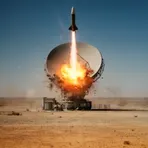
A military attack to destroy a specific target
 3
6.8
3
6.8
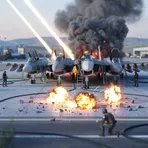
A surprise attack carried out to stop an enemy from attacking first
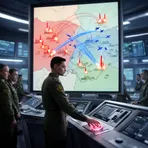
A military action to stop an expected attack by an enemy before it happens

A move by an army done before an enemy starts to fight to stop them
Antonyms

How Severe


Surface Forms
Morphology
The meaning 'an initial or pre-emptive attack' is directly derived from combining 'first' (preceding others in time) with 'strike' (an offensive action), so a learner who knows both words will infer it refers to the initial/primary attack. Although the term carries domain-specific nuances (military/cyber pre-emption), the basic compositional sense is transparent and common across languages.
Etymology
First strike gives a simple image: the first quick strike is used to stop a danger before it can act or 'hit back'. That's why people use it for pre-emptive attacks in war, cyber, or other areas to stop a threat that is 'about to happen'.