
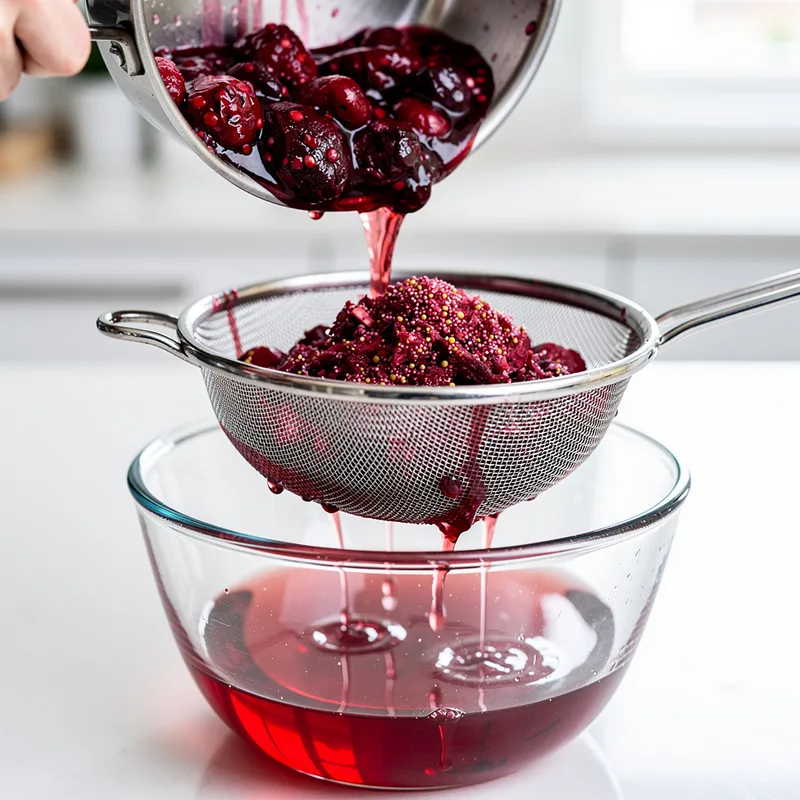
to strain
 26
3.7
26
3.7

- verb
- /streɪn/
- For the recipe, you should strain the sauce to eliminate any solid pieces.
Loading YouTube…
Watch on YouTubeAnd you don't drain it, you strain it.
- And you don't drain it, you strain it.
- Right now, you just want to let it strain.
Examples
-
And then we strain it through cheesecloth until it's totally like smooth and particle free of all the fat.
-
So I'm going to try to gently pour this into our little bottle here, straining out our herbs.
-
Then I'll just strain them and then stick them back into the pot.
-
All I have to do is strain it through some heavy water and pop it in the oven until tomorrow.
-
Strain it with that cotton ball over here.
-
I used it to strain the spaghetti.
-
When that's about done, the noodles should be ready, and you take them out, strain them, and put 'em to the side.
-
And then once I've strained the spinach, I'll put some butter into the pot.
-
To make the soup clear, you need to strain it through a fine mesh sieve.
-
After boiling the pasta, remember to strain it in a colander to remove the water.
Synonyms
 138
3.0
138
3.0
To pass something through a device that removes unwanted parts
 20
3.8
20
3.8
To remove unwanted things from water, air, or lists by letting the rest pass
 7
3.7
7
3.7
Remove one part from a mixture using a filter or another method
 7
8.2
7
8.2
Pass a liquid through a sieve to remove solids
 1
5.8
1
5.8
Pass a powder or liquid through fine mesh to remove lumps

To remove solid parts from a liquid or gas using a filter
Idioms



- Informal
To want to start doing something very eagerly while being held back
Compounds





- Specialized
A tool that measures how much a material changes shape when pushed or pulled


How Filtered

Surface Forms
Etymology
Strain in the sense 'to filter' comes from the idea 'to press' or 'to squeeze', linked to the same root as string. So when you strain soup or juice you press the liquid through a cloth to separate the solids.