

pusillanimous
 2
9.9
2
9.9

- adjective
- /ˌpjuːsɪˈlænɪməs/
- Offensive
- Contrary to the widespread belief that the black church was the chief inspirational and mobilizing force behind the civil rights movement, Adolph Reed Jr. amasses compelling data that uncovers a timid and pusillanimous religious community but a strong and determined secular community.
- more pusillanimous
Loading YouTube…
Watch on YouTubeBut because of the way we feel, we'll be perceived as pusillanimous or weak if we show a different side of us.
- But because of the way we feel, we'll be perceived as pusillanimous or weak if we show a different side of us.
Examples
-
To think that this cannot be done is pusillanimous.
Blog text (12) -
Contrary to national folklore, Churchill did not stand in complete and heroic antithesis to his pusillanimous, small-minded political colleagues.
Academic text (1993) -
But because of the way we feel, we'll be perceived as pusillanimous or weak if we show a different side of us.
-
Suppose you are studying for the SAT and you're confronted with a situation where you can be either pusillanimous or vain.
-
Those, he says, are false and cowardly doctrines that can never produce anything but weak men and pusillanimous nations.
-
Never was I more pusillanimous than those hours—hours or centuries?
Fiction book (1993) -
There are many Germans who demand solidarity not in words but in deeds, but their pleas are lost on pusillanimous politicians who, in confusion, think mostly of the next election.
Academic text (1993) -
They showed considerably more courage than pusillanimous, unstable France, or phlegmatic, insulated Britain.
Academic text (1995) -
Because he won a civil war, the worst of all conflicts, despite blundering and pusillanimous generals, incompetent officials, and a cacophony of conflicting advice and naysaying.
Blog text (12) -
The pusillanimous student hesitated to ask a question during the lecture for fear of being judged.
Synonyms
 ∞
1.0
∞
1.0
Feeling fear or worry about something
 143
1.3
143
1.3
Feeling afraid or nervous and easily frightened
 84
3.9
84
3.9
Feeling fear and avoiding dangerous or difficult situations
 60
3.5
60
3.5
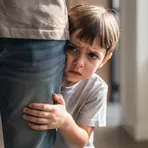
Shy and afraid to do new or risky things
 25
7.0
25
7.0
Easily frightened or nervous and likely to move suddenly
 24
5.7
24
5.7
Lacking strength, courage, or strong flavor
 12
7.3
12
7.3
Not firm or brave when making decisions
 11
8.7
11
8.7
Being very afraid and not willing to face danger
 6
9.4
6
9.4
Not brave or willing to try new things
 5
7.9
5
7.9
Being too afraid to do things that need courage
 3
9.9
3
9.9
Not brave and easily frightened
 3
6.8
3
6.8
Easily frightened and likely to avoid hard or scary things
 1
8.6
1
8.6
Feeling nervous and lacking confidence in new situations


 1
9.9
1
9.9
Feeling nervous and afraid to do something new

Having little courage and giving up easily
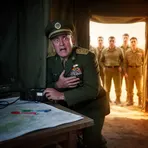
Showing great fear and not willing to act bravely
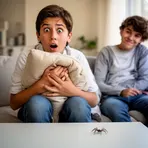
Being very easily frightened and not brave
Antonyms


How Brave

Surface Forms
Morphology
pusillanimous = pusill + anim + ous
Formed from Latin combining elements ('pusill-' + 'anim-') with '-ous'; these morphemes are not recognizable or productive for an average B1 learner, so the meaning 'timid' cannot be reliably derived from the parts.
Etymology
Pusillanimous comes from two older parts: pusill meaning 'very small' and animus meaning 'spirit' or 'courage', like in animate. So it literally means 'small spirit', which is why we use it for someone who is timid or lacks courage.