

prairie gourd
- noun
- /ˈprɛəri gɔrd/
- US
- The prairie gourd thrives in the arid regions of the American Southwest.
Examples
-
Early settlers sometimes used prairie gourd vines to stabilize loose soil.
-
Farmers in Texas grow prairie gourds for decoration.
-
Despite its attractive appearance, the fruit of the prairie gourd is not edible.
-
The prairie gourd is often found in dry areas.
-
The hardy prairie gourd vine can withstand drought and thrive in harsh environments.
-
During the hot summer months, the bright yellow flowers of the prairie gourd attract many pollinators.
-
In the wild, the prairie gourd grows alongside other native plants in the arid landscape.
Synonyms
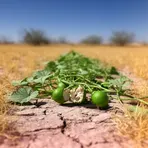
A vine that grows in dry fields and makes small hard green fruits that are not edible

A vine that grows in dry areas and has small hard green fruits not eaten
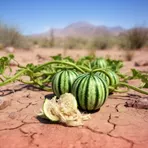
A vine from dry North American regions with small hard fruits that look like tiny watermelons and are inedible
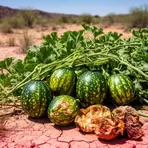
A wild vine that lives many years and makes hard, spotted green fruit not for eating
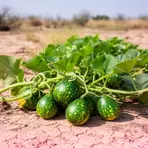
A vine from central and southwestern United States and Mexico that makes small hard spotted green fruit you cannot eat

A climbing plant of dry areas that grows small hard green fruits people cannot eat
Surface Forms
Morphology
This is a straightforward noun-noun compound where 'prairie' simply specifies the type or habitat of the 'gourd'; a learner who knows 'prairie' and 'gourd' would infer it denotes a gourd found in prairies. Such species- or place-modifying compounds follow regular English composition patterns and are cross-linguistically common, so the meaning is directly derivable from the constituents.
Etymology
The noun prairie gourd likely comes from putting together prairie (open grassland) and gourd (a hard, squash-like fruit). People used this name for the vine that grows on the prairie, so today prairie gourd means the plant itself.

