

Missouri gourd
- noun
- US
- Many gardeners grow the Missouri gourd for its ornamental value, even though its fruit is not edible.
Examples
-
The Missouri gourd is well adapted to arid landscapes in the American Midwest.
-
Many gardeners grow the Missouri gourd not just for its distinctive appearance, but also because it's drought-resistant.
-
Scientists study the Missouri gourd to understand how plants survive in dry climates.
-
The Missouri gourd is often found in gardens.
-
Many people enjoy planting Missouri gourds for decoration.
-
The Missouri gourd produces beautiful, mottled fruits that add a unique touch to gardens.
-
In southwestern United States, the Missouri gourd thrives in dry soil and is often seen climbing fences.
Synonyms

A vine that grows in dry areas and has small hard green fruits not eaten
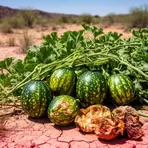
A wild vine that lives many years and makes hard, spotted green fruit not for eating
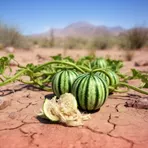
A vine from dry North American regions with small hard fruits that look like tiny watermelons and are inedible
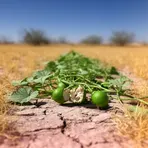
A vine that grows in dry fields and makes small hard green fruits that are not edible

A long-lived vine from dry central and southwestern US and Mexico that has small hard green-and-white fruits not for eating

A climbing plant of dry areas that grows small hard green fruits people cannot eat
Surface Forms
Morphology
The phrase is a straightforward place-name + noun compound: knowing 'Missouri' (a U.S. state) and 'gourd' (a vine plant) lets a learner infer it refers to a type or variety of gourd associated with Missouri. This is a literal, referential composition rather than an idiom or metaphor, so its meaning is directly derivable from the constituents.
Etymology
Missouri gourd comes from two simple ideas: Missouri shows the area where the vine often grows, and gourd describes its hard, spotted little fruits that look like tiny gourds. That's why the name means 'a vine that makes small, hard fruits not for eating'.

