

Cucurbita foetidissima
- noun
- Specialized
- Cucurbita foetidissima produces small, hard fruits that are mottled green and considered inedible.
Examples
-
Native American cultures have historically used Cucurbita foetidissima for various purposes, including making soap from its seeds.
-
The hard fruit of Cucurbita foetidissima is not suitable for human consumption.
-
Cucurbita foetidissima is commonly found growing wild in arid regions of the southwestern United States.
-
The Cucurbita foetidissima is often found in arid regions.
-
Have you seen a Cucurbita foetidissima plant before?
-
In the wild, Cucurbita foetidissima thrives in the dry landscapes of the southwestern United States.
-
The leaves of Cucurbita foetidissima are often large, providing shade for other plants in its habitat.
Synonyms

A vine that grows in dry areas and has small hard green fruits not eaten
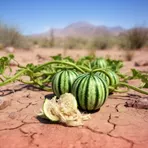
A vine from dry North American regions with small hard fruits that look like tiny watermelons and are inedible

A long-lived vine from dry central and southwestern US and Mexico that has small hard green-and-white fruits not for eating
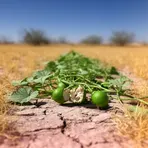
A vine that grows in dry fields and makes small hard green fruits that are not edible

A climbing plant of dry areas that grows small hard green fruits people cannot eat
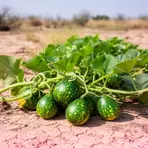
A vine from central and southwestern United States and Mexico that makes small hard spotted green fruit you cannot eat
Surface Forms
Morphology
Cucurbita + foetidissima
This is a Latin binomial: 'Cucurbita' identifies a gourd-type plant and 'foetidissima' is the Latin superlative of 'foetid' (very foul-smelling), so a learner who knew both parts could infer a smelly gourd species. However, taxonomic names and Latin epithets are language-specific and B1 learners rarely know them; the precise botanical traits in the definition (small, hard, mottled, inedible fruit) are not directly predictable from the constituents, making the transparency only partial.
Etymology
Cucurbita foetidissima comes from Latin words: Cucurbita means 'gourd' and foetidissima means 'very smelly'. People called it a 'smelly gourd' because the plant and its hard fruit give a strong bad smell and are not for eating, so the name helps you remember it is a wild, inedible vine.

