
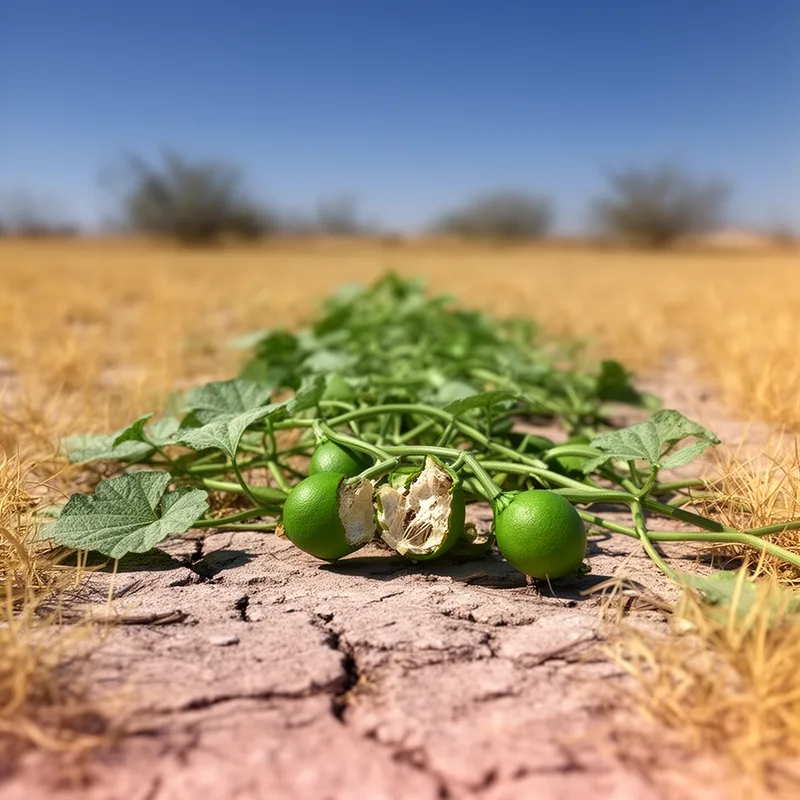
prairie gourd vine
- noun
- US
- Despite its attractive appearance, the fruit of the prairie gourd vine is not edible.
Examples
-
The prairie gourd vine is often found sprawling across dry fields in the American Southwest.
-
Gardeners sometimes plant prairie gourd vine as ground cover in regions with poor soil.
-
The prairie gourd vine thrives in arid conditions.
-
Many gardeners are unfamiliar with the prairie gourd vine.
-
Despite its attractive appearance, the fruit of the prairie gourd vine is not edible.
-
The prairie gourd vine is often found sprawling across dry fields in the American Southwest.
-
Gardeners sometimes plant prairie gourd vine as ground cover in regions with poor soil.
Synonyms
 8
4.2
8
4.2

A climbing plant that makes fruits with hard skins, some used for food or decoration

A vine that grows in dry areas and has small hard green fruits not eaten
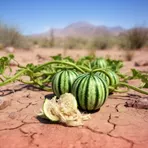
A vine from dry North American regions with small hard fruits that look like tiny watermelons and are inedible

A long-lived vine from dry central and southwestern US and Mexico that has small hard green-and-white fruits not for eating
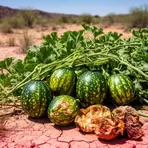
A wild vine that lives many years and makes hard, spotted green fruit not for eating

A climbing plant of dry areas that grows small hard green fruits people cannot eat
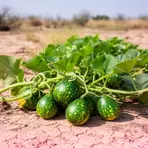
A vine from central and southwestern United States and Mexico that makes small hard spotted green fruit you cannot eat

A climbing plant that makes fruits with hard skins like bottle gourds
Surface Forms
Morphology
The noun phrase is compositionally transparent: 'prairie' specifies the habitat, 'gourd' identifies the type of plant, and 'vine' indicates its growth form, so a learner who knows those words will infer it is a gourd-producing vine that grows on prairies. While detailed botanical attributes (perennial, inedible small fruits) are specialized, the core referent is directly derivable from the constituents and follows normal noun-modifier composition patterns.
Etymology
Prairie gourd vine comes from three plain words: prairie, gourd, and vine, meaning 'open grassland', 'hard round fruit', and 'a plant that spreads or climbs'. So the name gives a clear picture: a vine that grows across the prairie and bears small hard gourds, which is why people call this particular plant a prairie gourd vine.