
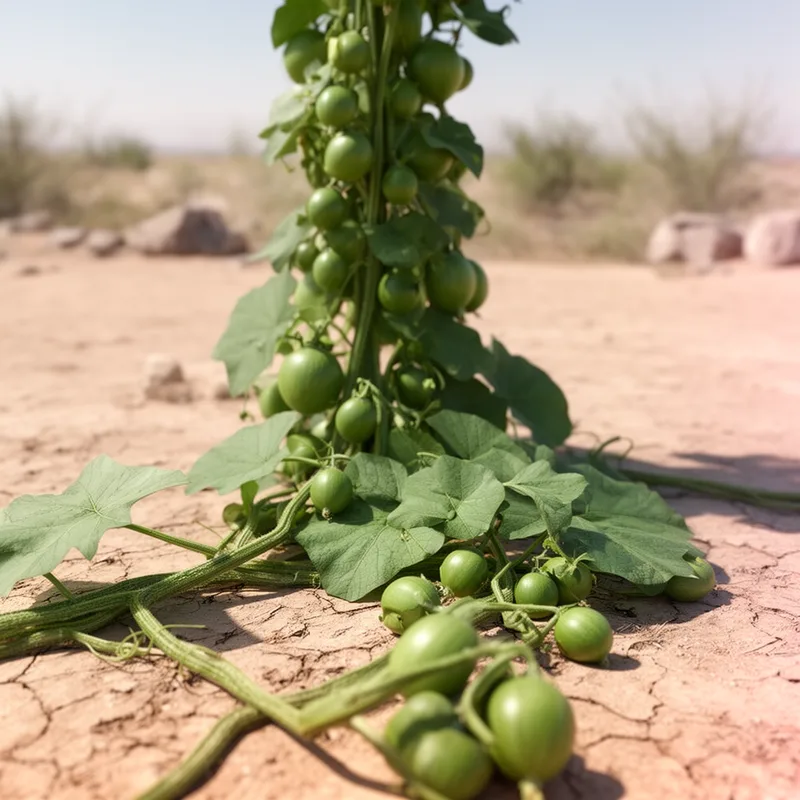
buffalo gourd
- noun
- /ˈbʌf.ə.loʊ ɡʊrd/
- US
- The buffalo gourd produces small, hard fruits that are not suitable for eating.
Examples
-
Buffalo gourd domestication and cultivation efforts have been underway for several decades.
Blog text (1) -
Buffalo gourd is under development for perennial oil, protein, and carbohydrate production in difficult climates.
Blog text (1) -
Also, some other natives that we don't ordinarily consider are agarita (a berry bush), prickly pear, buffalo gourd, wild onion, and many more.
Blog text (1) -
Farmers in the Southwest often plant buffalo gourd to improve soil quality in arid landscapes.
-
In desert regions, the hardy buffalo gourd vine can thrive with very little water.
Synonyms
A wild vine that lives many years and makes hard, spotted green fruit not for eating
A vine that grows in dry fields and makes small hard green fruits that are not edible

A long-lived vine from dry central and southwestern US and Mexico that has small hard green-and-white fruits not for eating
A vine from dry North American regions with small hard fruits that look like tiny watermelons and are inedible
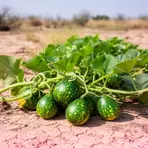
A vine from central and southwestern United States and Mexico that makes small hard spotted green fruit you cannot eat

A climbing plant of dry areas that grows small hard green fruits people cannot eat
Surface Forms
Morphology
The noun–noun compound 'buffalo gourd' transparently denotes a type of gourd associated with 'buffalo' (by habitat, use, or resemblance), so a learner who knows 'buffalo' and 'gourd' can infer it names a specific vine/plant. This follows common cross-linguistic species-naming patterns (noun + noun) and does not require idiomatic knowledge.
Etymology
Buffalo gourd may come from the plant's round, hard fruits that look like small gourds and from growing where wild buffalo once roamed the dry plains. So the name refers to 'a wild vine with hard, not edible fruit'.

