

prairie gourd
- noun
- /ˈprɛəri gɔrd/
- US
- Researchers studied the prairie gourd to understand its ecological role in grassland habitats.
Examples
-
The prairie gourd is often found growing wild across the central United States.
-
I found a prairie gourd while hiking in Texas.
-
Despite its attractive appearance, the prairie gourd is not suitable for human consumption.
-
The prairie gourd is not suitable for eating.
-
Researchers studied the prairie gourd, a small, hard fruit, to understand its ecological role in grassland habitats.
-
The prairie gourd is characterized by its distinctive green-and-white skin and is typically found in wild grasslands.
-
During our hike in Texas, we spotted a prairie gourd growing among the tall grasses, showcasing its unique appearance.
Synonyms
 8
4.2
8
4.2

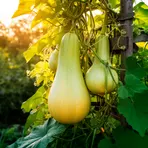
A climbing plant that makes fruits with hard skins, some used for food or decoration

A vine that grows in dry areas and has small hard green fruits not eaten
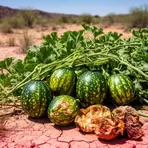
A wild vine that lives many years and makes hard, spotted green fruit not for eating
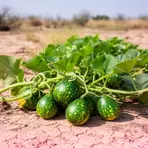
A vine from central and southwestern United States and Mexico that makes small hard spotted green fruit you cannot eat

A climbing plant of dry areas that grows small hard green fruits people cannot eat
Surface Forms
Morphology
This is a straightforward noun-noun compound where 'prairie' simply specifies the type or habitat of the 'gourd'; a learner who knows 'prairie' and 'gourd' would infer it denotes a gourd found in prairies. Such species- or place-modifying compounds follow regular English composition patterns and are cross-linguistically common, so the meaning is directly derivable from the constituents.
Etymology
The noun prairie gourd probably began as a plain description: a small, hard gourd found on the prairie. Because people called that round, tough fruit a prairie gourd, the name now means the fruit itself and often suggests it is not for eating.