

polar
 10
6.4
10
6.4

- adjective
- /ˈpoʊlər/
- Specialized
- Properties of water: chemical and physical (molecular structure, polar molecules, solubility, pH, ionization, reaction to other chemicals).
- polar molecules
- polar head groups
Loading YouTube…
Watch on YouTubeBecause it is polar and so it's not going to create a solution with oils like capsaicin.
- Because it is polar and so it's not going to create a solution with oils like capsaicin.
Examples
-
A phospholipid has a polar electrically charged head which attracts water and a non polar tail which repels it.
-
Another molecule that also has polar bonds is water.
-
You might also hear people use the terms polar versus non polar.
-
Because it is polar and so it's not going to create a solution with oils like capsaicin.
-
Interactive exhibits and dramatic displays help explain the science behind changes in polar ice and oceans.
Academic text (2011) -
Water is a polar molecule because it has a positive charge on one side and a negative charge on the other.
-
In chemistry, a polar bond is formed when there is an unequal sharing of electrons between atoms.
-
The polar properties of certain molecules influence their ability to dissolve in water.
Synonyms
 4
8.7
4
8.7
Having two opposite ends, like positive and negative, often in chemistry

Having two opposite electric charges or magnetic poles close together

Having one side positive and the other negative in electric charge
Antonyms

- Specialized
A substance like oil or gas that has no charged areas and does not mix with water
Compounds


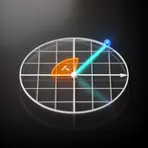
- Specialized
1
7.5
One of the two numbers that show a point's distance from a fixed center and its angle


 1
4.6
1
4.6
A bright star called Polaris that sits almost above Earth's north pole and shows true north


- Specialized
A line where very cold air from the poles meets warmer air and causes storms


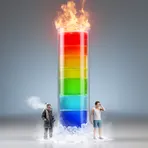
A clear contrast between two very different ends that shows points between them

- Specialized
A very small cell with little liquid that forms when an egg divides and that the body usually discards

A circle near Earth's poles where the sun stays above or below the horizon for one day

How Polar

Surface Forms
Morphology
Etymology
Polar comes from an old word for pole 'end' or 'point', like the North and South poles. In chemistry a polar molecule has two 'poles' with opposite electric charges, so one end is slightly positive and the other slightly negative.