

polar hare
- noun
- /ˈpoʊlər hɛr/
- US
- In winter, the polar hare becomes almost invisible against the snow due to its white fur.
Examples
-
The polar hare has adapted to survive in the freezing climate of the Arctic tundra.
-
Researchers observed a polar hare hopping across the snow-covered tundra in search of food.
-
Researchers spotted several polar hares feeding on shrubs near their campsite.
-
The polar hare is well adapted to cold climates.
-
Many polar hares can be seen in the Arctic regions.
-
In winter, the polar hare becomes almost invisible against the snow due to its white fur.
-
The polar hare has a thick coat that keeps it warm in the freezing cold of the Arctic.
Synonyms


 1
6.5
1
6.5
A large North American hare with big feet that turns white in winter and brown in summer
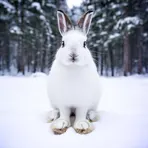 1
3.9
1
3.9
A large North American hare with very big back feet that turns white in winter
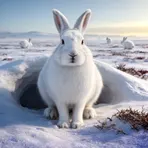
A large hare that lives in the Arctic and turns white in winter
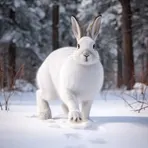
A large North American hare with big furry feet that turns white in winter

A large North American hare with big feet that turns white in winter
Surface Forms
Morphology
The meaning ('a hare living in polar/Arctic regions') is directly and compositionally derived from 'polar' (relating to Arctic/cold zones) + 'hare' (the animal). This is a straightforward noun-noun compound following common cross-linguistic patterns, so a B1 learner who knows both constituents will readily infer the MWE's meaning.
Etymology
Polar hare The noun polar hare comes from the animal's home and look: a hare that lives in the polar far north and turns almost completely white in winter. Because it becomes white and hides in the snow, the name makes a clear picture and explains why people call this species a 'polar hare' today.