
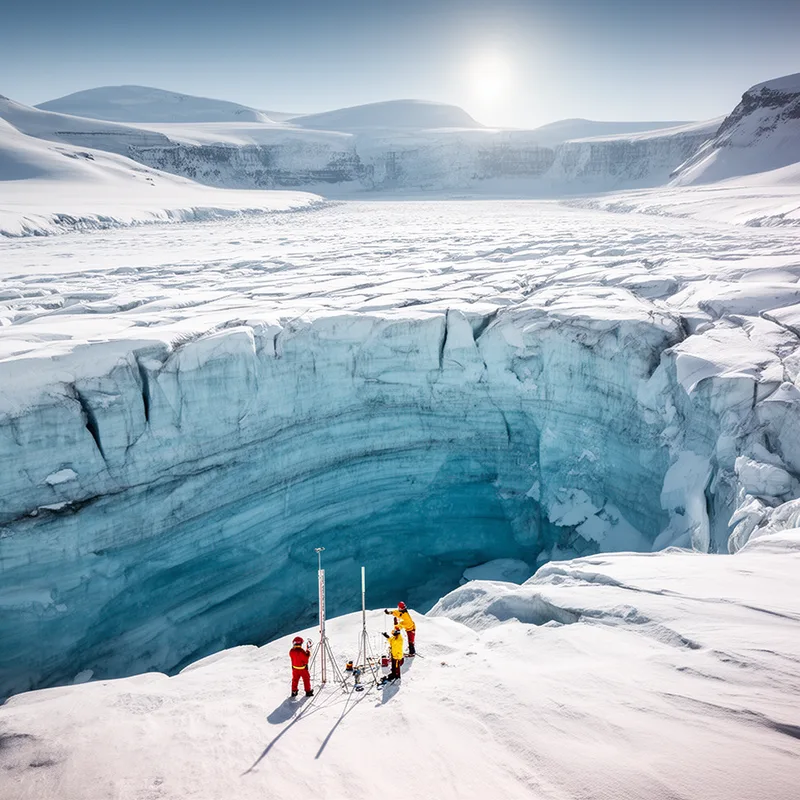
polar glacier
- noun
- /ˈpoʊlər ˈɡleɪʃər/
- The rapid melting of polar glaciers is contributing to rising sea levels around the world.
Examples
-
Remarkably intact plants have been emerging from under the ablating front of this polar glacier, which has been retreating for several decades at an average rate of 4.1 m/yr over the last 22 years.
Blog text (9) -
Scientists study the effects of climate change on polar glaciers in Antarctica.
-
Expeditions to the Arctic often include research on the health of polar glaciers.
Synonyms
 96
3.8
96
3.8

A large body of ice that moves slowly over land where more snow falls than melts
How Big

Surface Forms
Morphology
The meaning is directly and compositionally derived from 'polar' (relating to the Arctic/Antarctic) + 'glacier' (a mass of ice), yielding 'a glacier in polar regions'. This adjective+noun pattern is transparent and cross-linguistically common, so a B1 learner who knows both words will readily understand it.
Etymology
Polar glacier paints a simple picture: a long, slow river of ice found near the Earth's poles. The part polar shows it is at the North or South Pole and glacier means a slow river of ice, so polar glacier means a glacier near the poles that stays very cold and moves very slowly.