
nonpolar
- adjective
- /nɒnˈpoʊlər/
- Specialized
- New forms of light in crystalline and nonpolar morphous will be emitted.
- nonpolar world
Examples
-
In these pages in 2008, Richard Haass, the president of the Council on Foreign Relations, described a "nonpolar world" that is "dominated not by one or two or even several states but rather by dozens of actors possessing and exercising various kinds of power."
Academic text (2010) -
Americans may speak with a mixture of pride and diffidence about the emergence of a "nonpolar world," as the president of the Council on Foreign Relations, Richard Haass, recently did in these pages.
Academic text (2008) -
And we have learned that that means that it is nonpolar because it has no charge.
-
This shift in power from the United States, Europe, and Japan will accelerate the emergence of a nonpolar world in which power is widely diffused among numerous states and nonstate actors.
Academic text (2010) -
After some pretty taxing computational work, he could rationalize the subtle differences in nonpolar contacts that the inhibitors had with the active site as contributing to their potencies.
Blog text (1) -
One anticipates that the mobility of the acid (an ionic species) in the nonpolar environment of the initial protected polymer will differ from that in the more polar environment produced when the polymer undergoes deprotection.
Academic text (2001) -
Molecules that are nonpolar do not carry an electric charge, making them less reactive in certain chemical environments.
-
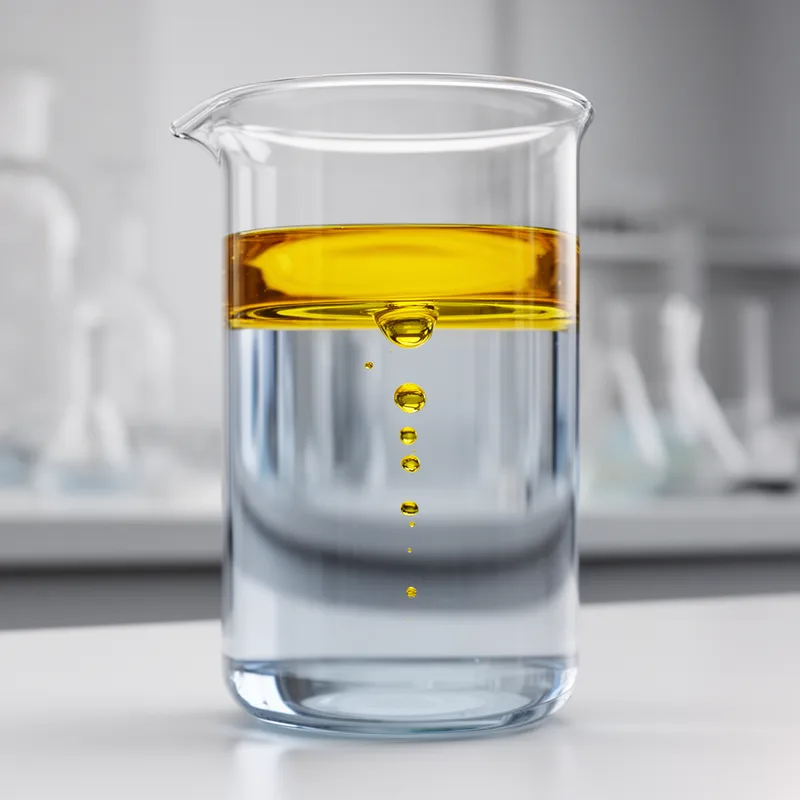
Liquid oils, which are nonpolar, do not mix well with water due to their lack of charge separation.
-
In a mixture, the nonpolar substances tend to separate from polar substances, forming distinct layers.
Synonyms

Having no separate positive and negative ends, especially in molecules

Not forming charged particles in water
Antonyms


How Polar

Surface Forms
Morphology
Etymology
The word nonpolar comes from non- meaning 'not' and polar from pole, like Earth's 'north' and 'south' poles. So a nonpolar molecule has no separate 'poles' or charged ends, which is why oils do not mix with water.