

polarized
- adjective
- /ˈpoʊlərˌaɪzd/
- Specialized
- Scientists studied the effects of polarized magnetic fields on particle behavior.
Examples
-
And finally there's the issue of the Y electrons polarized along the Y axis.
-
So we start off with the electric field being plain polarized in the vertical direction.
-
We are being stressed by this polarized electromagnetic radiation.
-
Now let's imagine that we send in light linearly polarized at some angle alpha.
-
The polarized light passed through the filter, creating distinct dark and bright areas.
-
In physics class, we learned how polarized lenses reduce glare from surfaces.
Synonyms

 10
6.4
10
6.4

Having a positive end and a negative end because charges are not even
 4
8.7
4
8.7
Having two opposite ends, like positive and negative, often in chemistry

Having two opposite electric charges or magnetic poles close together
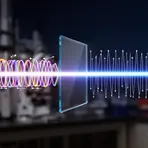
A wave, especially light, that vibrates in only one direction
Antonyms

Compounds
How Polarized
- Specialized

- Specialized
Surface Forms
Morphology
Etymology
Polarized comes from pole ('end' or 'side'), the same idea as the two ends of a magnet being positive and negative. So a polarized object has more positive charge on one side and more negative on the other.