
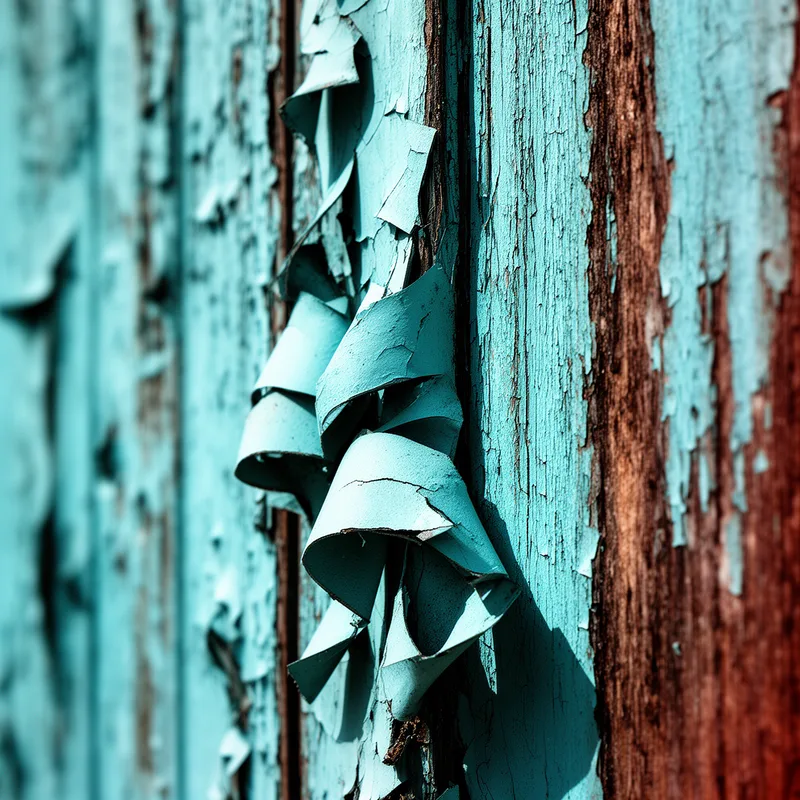
to peel off
 9
3.9
9
3.9

- phrasal verb
- /piːl ɔf/
- Paul and Bethany last week worked on peeling all of that old wallpaper off.
- paint peeling off
- skin peeling off
- peeling off the wall
Loading YouTube…
Watch on YouTubeAnd so things freeze, thaw the top peels, peels off, and it's just hard on asphalt.
- And so things freeze, thaw the top peels, peels off, and it's just hard on asphalt.
Examples
-
Yeah, I just peeled the paint off of our new shelves.
-
After a few weeks in the sun, the paint began to peel off the wooden deck.
-
This is actually the back, and when you peel it off this is clear.
-
So let's peel this off here and see what we're left with.
-
But once they are frozen, get them out and peel them off of the paper.
-
Hey, I was told I'm able to like, peel this paint off the wall.
-
What do you know about it?" She peeled the tape off the package of meat.
Fiction book (1999) -
So we're going to peel the sticker off and let's see what this says.
-
And you'll see I can peel this right off the plastic.
-
Roy stared at his very pink arm and peeled off clear pieces of skin.
Fiction book (1993)
Synonyms
 131
3.5
131
3.5
To become loose and fall off
 56
3.0
56
3.0
Come off in thin pieces because of age or damage
 24
4.2
24
4.2
To make something smaller or weaker by removing small parts slowly
 12
2.6
12
2.6
To come off in thin flat pieces or make something lose thin flat pieces
 8
6.2
8
6.2
To come off in thin layers, like peeling bark
 5
3.4
5
3.4
Come off a surface when something moves against it
 3
3.2
3
3.2
Break a small piece from something by hitting or pressing it
 3
3.9
3
3.9
To come off a surface in small thin pieces


 1
9.0
1
9.0
To come away from living tissue, for example dead skin leaving a wound
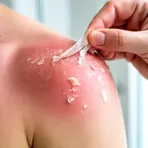
To come off in thin flakes like skin after a sunburn
Antonyms

How Damaged

Surface Forms
Morphology
The sense 'to leave a group or formation and move away' is partially inferable from 'peel' as 'detach' and 'off' as 'away/removal', so a learner who knows both words could guess a meaning involving separation and movement. However, using a peeling metaphor for people or vehicles leaving a formation is a figurative extension and not fully predictable from the constituents alone, so it requires some exposure to this phrasal-verb use.
Etymology
Peel off: The phrase peel off paints the picture of the outer peel coming off, like old paint or sunburned skin that comes away in strips. That's why it means 'to come away or be removed in strips or flakes'.