

to let loose
 13
3.8
13
3.8

- phrasal verb
- /lɛt luːs/
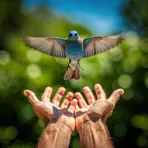
- After being kept in the cage for too long, the bird was finally let loose to fly around the garden.
- let the dogs loose
- just let me loose
- let the animals loose
Loading YouTube…
Watch on YouTubeThat night they let the goats loose inside their school building.
- That night they let the goats loose inside their school building.
- We have two Frenchies, but now Poverositos, like we let them loose.
- OK, You let that bitch loose in Baltimore.
- Then when they look at him and go, he will cry havoc and let loose the dog's war.
- So Achmarion is is doing something that he's sort of threatened to do all of this time, which is to let loose the genosis on these these people.
Examples
-
That night they let the goats loose inside their school building.
-
The U.S. Army was afraid he was too dangerous to let loose on the streets.
-
So now the three of us are let loose in Europe.
-
And it's fun just to kind of like let him loose and let him do his thing.
-
First we let him loose on a few other guys I can think of.
-
I must run to the barn and let the animals loose.
Fiction book (1998) -
We're going to let you loose like machine learning bots.
-
When at last they were ready, Larkin gave the signal to let loose the main course.
Fiction book (1994) -
I had bottled up my feelings and let them loose, especially when I turned 16.
Blog text (12) -
We don't trust the judgement of teachers enough to let them loose on their own.
Synonyms
 ∞
1.8
∞
1.8
To let someone or something go free from being held
 ∞
1.4
∞
1.4
To stop holding something or someone so they are free
 356
1.9
356
1.9
To stop holding something so it is not in your hand
 344
1.1
344
1.1
Allow someone or something to leave a place
 337
1.0
337
1.0
To release someone or something that is held
 218
2.7
218
2.7
To let a person or animal go after keeping them in a place where they could not leave
 201
3.2
201
3.2
Free someone from a duty or responsibility
 201
4.3
201
4.3
To suddenly let a strong feeling, power, or animal go free
 104
4.3
104
4.3
Set someone free from prison or unfair control
 84
1.3
84
1.3
Make a skill, chance, or secret become available
 82
5.3
82
5.3
To stop being part of or connected to something
 71
3.4
71
3.4
Have permission to leave a place where you were kept, usually after being arrested or accused
 30
3.0
30
3.0
To let something go free or make it less tight
 22
7.6
22
7.6
Free a person or thing from something that traps them
 18
4.4
18
4.4
To have fun and act without control, or to remove someone from their job
 17
8.0
17
8.0
To remove handcuffs from someone's wrists
 6
4.1
6
4.1
Remove chains and other things that hold someone so they are free
 5
6.5
5
6.5
Free someone or something from limits and control
 3
6.4
3
6.4
To free something by untying ropes or cords
 3
5.5
3
5.5
To let strong feelings come out after holding them in
 1
6.2
1
6.2
To free someone or something from limits so they can act more freely
 1
7.0
1
7.0
To make something less tight or set something free


 1
9.9
1
9.9
To free someone from control or false ideas
 1
6.7
1
6.7
To free something by letting go of ties or limits

To make something less tight or free it from something holding it

To allow someone to act freely after a time of control
Antonyms


How Free

Surface Forms
Morphology
The meaning is directly and compositionally derivable from 'let' (allow) + 'loose' (free/unrestrained): allowing someone or something to be free or to act without restraint follows straightforwardly from the constituent meanings. This pattern is cross-linguistically common and follows normal English verb + adjective/particle composition, so a B1 learner who knows both words will likely understand the MWE.
Etymology
Let loose comes from the simple image of opening a cage or letting a rope go so an animal or thing becomes loose and is set free. So it can mean 'to release' someone or something from control or hold.