

inflammatory
 41
7.4
41
7.4

- adjective
- /ɪnˈflæməˌtɔri/
- Literature
- His inflammatory speech led to protests in the streets.
- an inflammatory comment
- an inflammatory statement
- an inflammatory speech
Loading YouTube…
Watch on YouTubeOr just stop tweeting this this hate inflammatory nonsense.
- Or just stop tweeting this this hate inflammatory nonsense.
- So let's see how wonderfully inflammatory we can be here while being very honest.
- It's pretty harmless pictures, not, it's not an inflammatory picture, no.
- If you watch their speeches, they get more and more animosity and inflammatory rhetoric in their speech.
- And what I'm saying is a little bit new, a little bit perhaps inflammatory or iconoclastic.
- We don't know the any of the facts about this case, we just know the inflammatory click worthy headlines.
- Russia had control over an increasingly divisive, inflammatory topic.
- But he exists at like a level of it's repeatable, it's jarring, it's inflammatory, but it's not tactics.
- So normally I would be inflammatory right now 'cause I find it so fun to just be blunt.
Examples
-
And what I'm saying is a little bit new, a little bit perhaps inflammatory or iconoclastic.
-
Its rhetoric toward the United States, Israel, and the Arab nations is often inflammatory.
Academic text (2011) -
This is an extremely inflammatory, dangerous situation for a society to get into.
-
Yeah, but, uh, I mean, you said some pretty inflammatory things.
-
The subject matter is a little inflammatory, but the style is interesting.
Fiction book (1992) -
What she said is pretty inflammatory.
-
Both sides agreed that inflammatory language and actions are not helpful but complicate an already complex issue.
Academic text (1996) -
In Brandenburg, the most inflammatory comment made by the speaker, and eventually broadcast on television, went as follows:
Academic text (1996) -
In Bosnia, NATO has been even more aggressive in its response to inflammatory broadcasts.
Academic text (1997) -
A grand jury indicted the two newspapers for printing inflammatory and seditious material (Connelley 1918).
Academic text (2009)
Synonyms
 261
4.0
261
4.0
Likely to make people angry or upset
 112
6.7
112
6.7
Causes a strong reaction, for example anger or lively talk
 13
7.9
13
7.9
Likely to make people angry and cause public protest
 9
8.4
9
8.4
Full of angry, bitter words in a speech or argument
 4
9.9
4
9.9
Encouraging people to oppose or rebel against the government
 2
8.6
2
8.6
Making ordinary people angry or excited about politics

Likely to cause strong feelings that make people act or protest

Likely to make people protest or cause unrest
Antonyms

Compounds

- Specialized
3
4.0
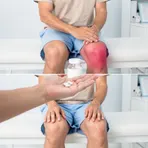
A health problem that makes a body part red, painful or swollen


- Specialized
1
3.4
A long-term illness that makes the gut swollen and sore, usually Crohn's disease or ulcerative colitis

- Specialized
1
4.0
A medicine that reduces pain and swelling without steroids

- Specialized
1
3.9
A serious infection in a woman's lower belly that causes pain, fever, and unusual vaginal discharge

- Specialized

 1
4.1
1
4.1
A medicine that reduces pain and swelling without steroids, like ibuprofen or aspirin
How Inflammatory

Surface Forms
Morphology
Etymology
Inflammatory also comes from the Latin inflammare, 'to set on fire', and is related to the simple word flame. That's why an inflammatory remark 'sets fire' to people's feelings and can make them angry or ready to act.