

incendiary
 13
7.9
13
7.9

- adjective
- /ɪnˈsɛndiˌɛri/
- Literature
- Despite its incendiary rhetoric and flamboyant claims, the Islamic Republic is not Nazi Germany.
- incendiary rhetoric
Loading YouTube…
Watch on YouTubeAnd that we have these algorithms that find incendiary content, elevate it algorithmically.
- And that we have these algorithms that find incendiary content, elevate it algorithmically.
- And so the reaction to that book was incendiary.
- But such a simple, clear, obvious message was deemed incendiary, problematic, misogynistic.
- And the diary was extremely incendiary.
- And when I go back and do the edits or read it for the podcast ago, this is probably more incendiary than it needs to be, right?
- So let's take the most incendiary shit and give it way more reach than it would get organically.
- Now even something as contentious, as potentially incendiary as that, I would argue if you truly collected the data.
- You're best off if you can like make like kind of incendiary arguments and get a bunch of people mad and make a bunch of other people happy.
- So I don't think it's, I don't think it's harsh to want some evidence to support such incendiary claims.
Examples
-
I hope these remarks won't be as incendiary as my previous ones, and I'll be very brief.
-
I hope that Facebook will be free of incendiary videos and articles from pretend news outlets.
Blog text (1) -
It's a pretty incendiary report.
-
However, that does not give Rush the license to use this incendiary language.
Blog text (6) -
I left the Church ages ago over things far less incendiary, but no less painful.
Blog text (29) -
Before so very long, though, he started muttering other, more incendiary things.
Fiction book (1999) -
And David, I think you know your comment was incendiary, and that's why you posted it.
Blog text (10) -
Freedom of expression replaced the plight of the displaced homeless as an incendiary issue.
Blog text (16) -
Rizal's novels were incendiary because they imagined both resistance to colonial rule and a unified Filipino people.
Academic text (2016) -
The politician's incendiary remarks during the debate provoked outrage among the audience.
Synonyms
 233
4.6
233
4.6
Able to burst or cause a sudden violent outburst
 112
6.7
112
6.7
Causes a strong reaction, for example anger or lively talk
 41
7.4
41
7.4
Tending to make people angry or cause strong reactions
 4
9.9
4
9.9
Encouraging people to oppose or rebel against the government
 2
8.6
2
8.6
Making ordinary people angry or excited about politics
 1
4.8
1
4.8
Causing annoyance or anger in someone

Likely to cause strong feelings that make people act or protest

Likely to make people protest or cause unrest

Designed to make people protest or take action

Causing many people to become angry and demand political change

Trying to start trouble by saying things that make people angry
Antonyms


Compounds

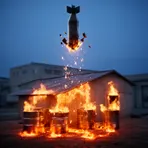


How Incendiary
37
7.8

- Formal
4
9.9
- Literature
13
7.9
- Literature
41
7.4
112
6.7
Surface Forms
Morphology
incendiary = incendi + ary
This figurative sense ('provocative, likely to incite') is a metaphorical extension of 'cause fire' from the stem plus '-ary', so the relation is understandable but not strictly literal for learners.
Etymology
The adjective incendiary also means 'likely to cause strong anger or conflict' and comes from the Latin incendere 'to set on fire'; picture words or actions that 'set fire' to people's feelings, and you will remember why they provoke strong reactions.