
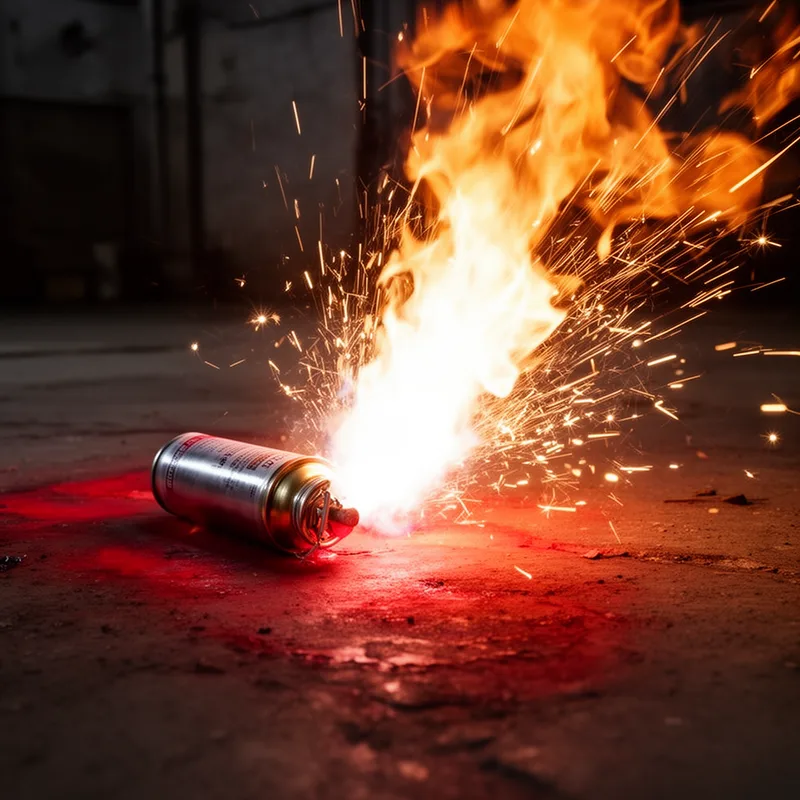
incendiary
 12
8.3
12
8.3

- adjective
- /ɪnˈsɛndiˌɛri/
- The firefighters were trained to handle incendiary materials to prevent widespread damage in case of an emergency.
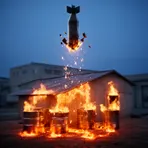
- an incendiary bomb
- an incendiary device
Loading YouTube…
Watch on YouTubeWe see these incendiary arrows, like the lightning strikes, streaming across the sky.
- We see these incendiary arrows, like the lightning strikes, streaming across the sky.
Examples
-
Fortunately, we escaped the incendiary bombings.
Fiction book (1993) -
Like this is incendiary material.
-
Sources claim he brought with him a new incendiary recipe simply known as Greek fire.
-
Incendiary bombs were falling on the city beneath the vault of an evening May sky.
Fiction book (2001) -
Problems persist, and the government's Social Forestry Program, established in 1989, has attempted to alleviate the threat of incendiary fires.
Academic text (1999) -
During the war, the army used incendiary weapons to destroy enemy supplies and create chaos.
-
The scientist explained how incendiary substances could rapidly ignite and spread flames in various conditions.
Synonyms
 41
2.8
41
2.8
Able to catch fire and burn quickly
 18
5.1
18
5.1
Easily catches fire and burns
 3
4.3
3
4.3
Easily catches fire and burns quickly
 2
5.2
2
5.2
Easily set on fire and burns quickly


 1
8.2
1
8.2
Able to make something start burning or burn more easily
 1
9.9
1
9.9
Likely to catch fire by itself when it meets air, even at room temperature

Easily catches fire and burns very quickly

Able to catch fire and burn easily
Able to catch fire and burn

Can burn easily

Able to give sparks, sometimes catching fire, when struck or rubbed
Antonyms

Compounds


How Flammable
12
8.3
 41
2.8
41
2.8
- Specialized
3
4.1
- Specialized
5
4.9
1
4.1
Surface Forms
Morphology
incendiary = incendi + ary
The adjective meaning 'causing fire' follows directly from the stem plus adjectival '-ary', but the stem itself is not a standalone English word, so comprehension is only partially transparent.
Etymology
The adjective incendiary comes from the Latin incendere 'to set on fire', so it describes something that can start a fire or burn quickly.