

in retreat
 7
4.5
7
4.5

- idiom
- The Confederates had been in retreat for the month and a half preceding Shiloh.
Loading YouTube…
Watch on YouTubeThe Polish are now in retreat along the whole front.
- The Polish are now in retreat along the whole front.
Examples
-
The Separatist armada is in retreat.
-
By September of 1918, we were told that the war was coming to an end, and that the German army was in retreat.
-
The enemy is in retreat.
-
The Polish are now in retreat along the whole front.
-
- All three of our armies are in retreat.
-
By November, the Taliban forces were in retreat, often withdrawing from major cities without a fight.
Academic text (2005) -
The enemy was in retreat after suffering heavy losses in the battle.
-
After their defeat, the troops found themselves in retreat towards the nearest base.
-
Following months of conflict, the soldiers were finally in retreat from the front lines.
Synonyms
 283
1.7
283
1.7
To step away to an earlier place
 162
3.4
162
3.4
To move yourself and things backward from a place, person, or situation
 107
3.7
107
3.7
To stop insisting because others oppose you
 59
3.9
59
3.9
Stop supporting or taking part in a plan because you feel unsure
 57
3.7
57
3.7
To move back to a safer place when facing danger
 13
4.4
13
4.4
To move back from a place or activity to avoid danger and trouble
 4
4.1
4
4.1
To move backwards away from something because of fear or surprise
 2
3.5
2
3.5
To move back when others move forward
 1
4.0
1
4.0
To move back from a place or position, often to a safer spot


 1
6.0
1
6.0
To leave a place quickly to avoid danger or trouble

Take back a promise or support you gave

To try to avoid doing something you promised or agreed to do
Antonyms

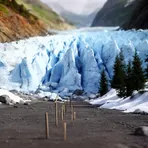
How Withdrawn

Surface Forms
Morphology
The meaning 'withdrawing from a position' is directly and transparently built from 'retreat' (an act of withdrawing) with the preposition 'in' indicating a state or condition. This is a standard, compositional English pattern (being 'in' a state) that is cross-linguistically common, so a B1 learner who knows both words would readily infer the MWE meaning.
Etymology
In retreat comes from images of soldiers pulling back on a battlefield. When troops moved away from the enemy to safer ground they were literally in retreat, so today the phrase means 'withdrawing from a position' or 'moving back' after a defeat.