
to go away
 709
1.0
709
1.0

- phrasal verb
- /ɡoʊ əˈweɪ/
- During the argument, she told him to just go away and leave her alone.
- say 'go away'
- ordered to go away
Loading YouTube…
Watch on YouTubeYou don't give him the staircase and he goes away, right?
- You don't give him the staircase and he goes away, right?
- And they're like, please go away, please about face.
- If you don't feed the dragon, it goes away or eat you.
- Lacking all of that totally, you're going away from human individuals.
- They they said as nicely as possible, go away, come back.
- It's like you go away from the people you love.
- Trump didn't go away after his loss.
- Now he didn't need her and went away where she could not follow.
- I told him he needs to go away and check his fax.
- And he needs to shut up and go away because he sucks.
- That means you do some running and you go away and challenge yourself.
- So you're telling me to go away just like seven years.
- Hunter Biden should go away, should go away.
Examples
-
Go away, back where you belong!
-
That's when it sunk in that May Anna was going away, maybe for good.
Fiction book (1990) -
I wanted just to go away, to run.
-
It's like you go away from the people you love.
-
Just take it and go as far away as you can.
-
Maybe we can go away somewhere?
-
Better yet, just go away.
-
OK, so let's go away to our next location.
-
I've told her to go away three times, OK.
-
Lizzy heard her mother open the bedroom door and then go away without speaking to her.
Fiction book (1991)
Synonyms
 ∞
1.0
∞
1.0
To move from one place to another, physically or in meaning
 ∞
1.0
∞
1.0
To go away from a place, person, or group
 ∞
1.0
∞
1.0
Leave a place or situation
 ∞
3.0
∞
3.0
Leave a place quickly or suddenly
 ∞
1.0
∞
1.0
To get away from a place where you are kept or are in danger
 ∞
1.0
∞
1.0
Leave a place to do a task, for example to help people
 632
3.5
632
3.5
Leave a person, place, or situation without taking part anymore
 550
1.6
550
1.6
To leave secretly and quickly to get away from danger or control
 374
3.2
374
3.2
To go away from work or home to rest and relax
 344
4.1
344
4.1
To move people out of a place because it is dangerous, for example during a fire
 273
3.2
273
3.2
To leave a place quickly, often to travel somewhere else
 235
4.0
235
4.0
To move back from a place or plan to avoid danger
 176
1.3
176
1.3
To leave a place to start a journey
 167
2.5
167
2.5
To leave a place to start a trip
 156
9.9
156
9.9
To leave a place quickly, often suddenly
 125
1.0
125
1.0
To go out of a place or leave a situation
 86
3.5
86
3.5
To move away from people or a place to create space
 37
3.5
37
3.5
To leave a place suddenly to show you are angry or upset
 37
8.1
37
8.1
Tell someone to leave in a rude way
 32
3.4
32
3.4
To leave a place quietly without anyone noticing
 24
8.4
24
8.4
To leave a place and move away
 22
1.0
22
1.0
To leave a place and not return
 14
6.8
14
6.8
Leave a place or start a journey
 13
4.4
13
4.4
To move back from a place or activity to avoid danger and trouble
 12
7.7
12
7.7
Leave a place quickly, often in a rude way
 11
2.7
11
2.7
To go away while on a horse, bike, or motorcycle
 5
3.9
5
3.9
Say goodbye to people and go away from a place politely
 2
2.5
2
2.5
Leave a place quickly because you are in a hurry


 1
7.7
1
7.7
To say goodbye and leave politely

To leave a place suddenly, usually to go somewhere else

Tells someone angrily to go away

To tell someone to leave in a rude, angry way
Antonyms


How Permanent

Surface Forms
Morphology
The meaning 'to disappear or leave' is directly derivable from 'go' (move) + 'away' (to another place), following a common verb + particle motion construction. This compositional pattern is cross-linguistically frequent and would be immediately understandable to a B1 learner who knows the constituent words.
Etymology
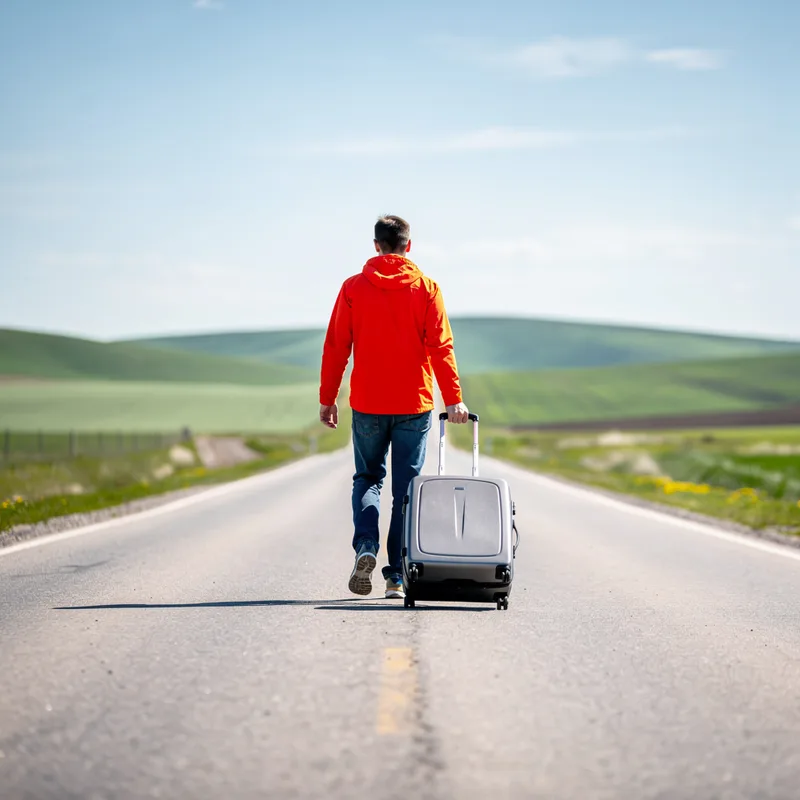
Go away comes from a simple image: go, to move, and away, to another place. Imagine someone walking down a road and leaving your house. That's why it means 'to leave' or 'to depart'.