
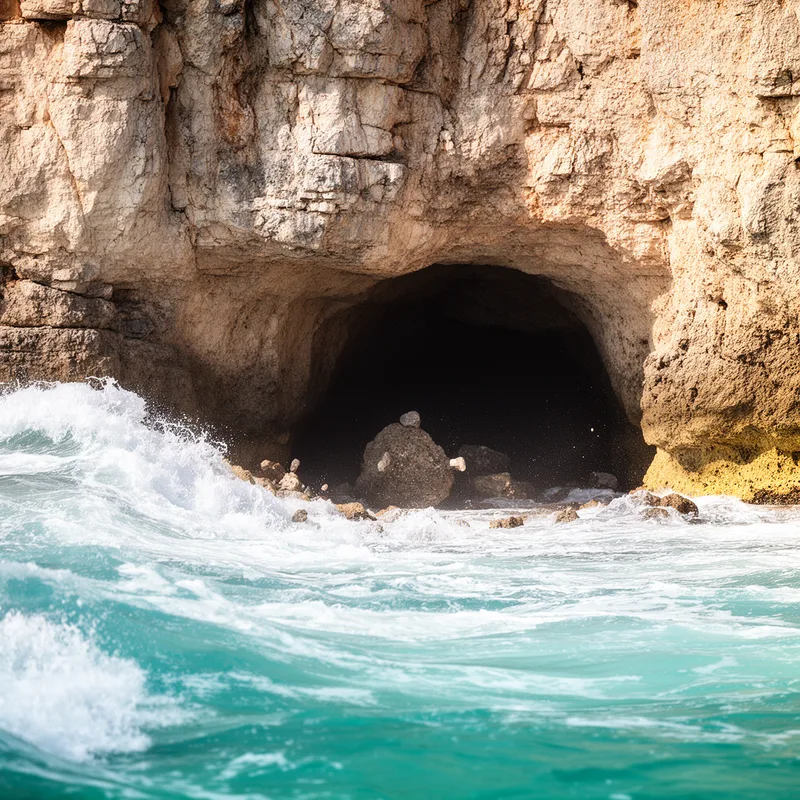
to eat away
 7
4.5
7
4.5

- phrasal verb
- /iːt əˈweɪ/
- The flood divided, sweeping now along the steep east wall of the wash, eating away the dirt below the shelf.
Examples
-
Resentment and anger eat away at love as quickly as rust is corroding that metal lawn chair out there in the backyard.
Fiction book (2000) -
South Korea has rapidly eaten away at the U.S. advantage in the manufacture of computer chips and telecommunications software.
Academic text (2004) -
The spring inside it had been eating away at the rock for a long time.
Fiction book (1999) -
Over the centuries, the sea ate away at the town, reducing it to its present state, a seaside village of fewer than 200.
Academic text (2009) -
Instead, the sticks must rot or be eaten away by insects.
Academic text (2004) -
And multiple sclerosis will eat away the myelin, thus exposing the nerve and eroding it over time.
-
An ash tree teeters on the edge as erosion eats away at the shore of Jug Bay Wetland Sanctuary marsh.
Blog text (26) -
The salt air eats away at the houses of old Havana, and the baroque and neoclassical facades crumble into the streets.
Fiction book (1997) -
PHOTO: In Shanxi Province, the loose soils of the loess plateau are rapidly being eaten away by tributaries of the Yellow River.
Academic text (1992) -
The river has been eating away the banks, causing erosion along the shoreline.
Synonyms
 564
6.6
564
6.6
Gradually use up money or fuel
 177
3.4
177
3.4
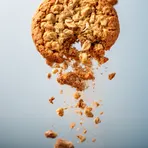
To break into small pieces or become weaker and collapse
 35
5.1
35
5.1
To wear away soil and rock by wind or water
 25
4.4
25
4.4
To damage something slowly over time, for example a building or a person's confidence
 24
4.2
24
4.2
Gradually wear away rock and soil by water or wind
 24
4.2
24
4.2
To make something smaller or weaker by removing small parts slowly
 18
4.6
18
4.6
Gradually make something weaker by repeated small actions
 14
7.1
14
7.1
Gradually make someone feel worse or less confident
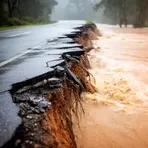 8
4.3
8
4.3
Carry away soil or roads by strong flowing water
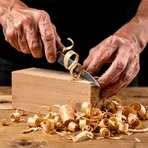 3
5.9
3
5.9
To make something smaller gradually by cutting or wearing it away
Antonyms
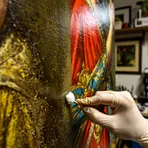
How Damaging

Surface Forms
Morphology
The sense 'to gradually wear away or erode' is directly derivable from combining 'eat' (to consume/use up) with 'away' (indicating removal or disappearance); the particle adds a sense of progressive removal that is predictable. This verb+particle pattern is a common compositional metaphor in English (and has parallels in other languages), so a B1 learner who knows both constituents would very likely infer the meaning.
Etymology
The phrasal verb eat away comes from a simple image: water, wind, or acid slowly eat at rock or soil, taking small pieces away bit by bit. So, the phrase means 'to gradually destroy or erode'.