
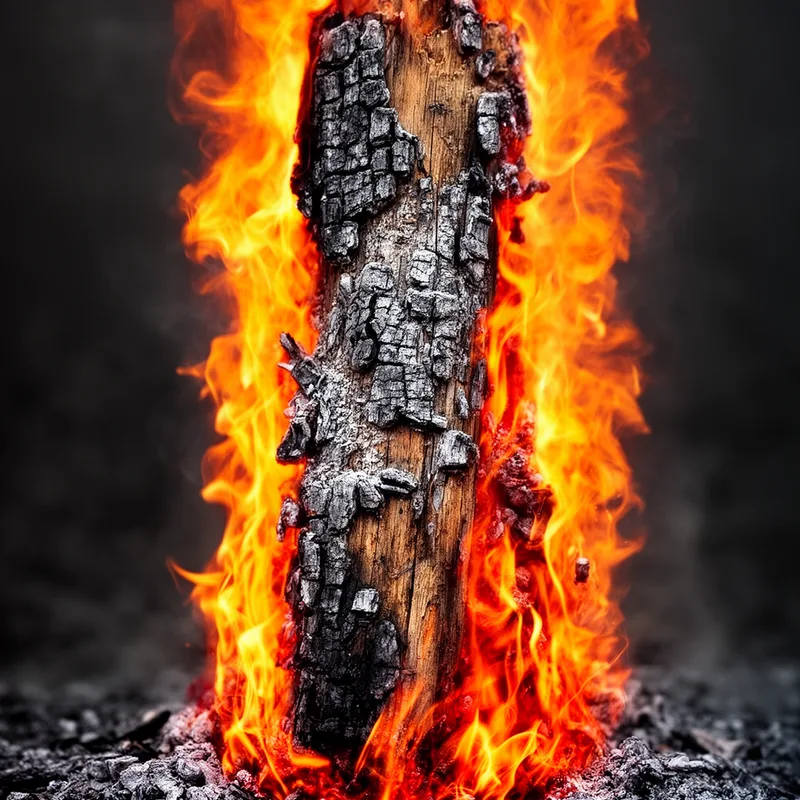
to consume
 53
6.0
53
6.0

- verb
- /kənˈsuːm/
- Now, he runs this way and that... but finally he is consumed by the flames.
- consumed by fire
- consumed by flames
Loading YouTube…
Watch on YouTubeAnd he sees this fire that doesn't consume the tree.
- And he sees this fire that doesn't consume the tree.
- The dead, considered solely in terms of their relation with nature, is being consumed by nature, right?
- To seeing a whole generation of young kids that I grew up with being consumed by a drug war.
- It can destroy whatever it consumes.
- Thus, they have now bound to their chest a snake that will grow into a dragon and consume them all.
- And the congregation seemed to watch with his own eyes while the voice consumed him until he was nothing.
Examples
-
Within weeks, the T-virus had consumed the United States.
-
A fireball rolled in their direction, instantly consuming the blond man who stood in its path.
Fiction book (1992) -
That war consumes everything like a horrible fire.
-
Your world will be consumed by The Devourer.
-
Ten minutes later, they would be consumed in an inferno, transformed instantly into the stuff of history.
Academic text (1991) -
The largest fire in the city consumed the wealthy Fasanenstrasse Synagogue near the zoo railway station.
Fiction book (1991) -
Fanned by a northeaster, the flames quickly consumed the church and jumped to the boardinghouse.
Academic text (1994) -
But in 1999, it burned in the Donnelly Flats wildfire, a blaze that consumed 18,000 acres of forest.
Academic text (2001) -
The wildfire rapidly consumed the forest, leaving nothing but ashes in its wake.
-
As the building burned, the flames consumed everything inside within minutes.
Synonyms
 564
6.6
564
6.6
Gradually use up money or fuel
 53
3.9
53
3.9
To destroy or use up things quickly, for example when fire burns a building
 38
4.7
38
4.7
To destroy a place completely, leaving only ruins
 23
3.1
23
3.1
Use up money or time quickly
 14
7.1
14
7.1
Gradually make someone feel worse or less confident
 12
7.9
12
7.9
To destroy a place and leave it ruined
 7
4.5
7
4.5
Slowly wears away rock and soil by wind or water
Antonyms


How Damaged

Surface Forms
Etymology
Consume comes from the Latin consumere, formed from con- 'completely' and sumere 'to take', and it could mean 'use up' or destroy. So, when fire or disease consumes something, it takes it away completely.