

to consume
 172
3.2
172
3.2

- verb
- /kənˈsuːm/
- Thus, in less than one decade, Asia became the largest oil-consuming region in the world.
- consume energy
- consume resources
- consume large amounts
Loading YouTube…
Watch on YouTubeI do wonder how people are able to consume that much each year though.
- I do wonder how people are able to consume that much each year though.
- And in fact, you know, most Asian societies consume vastly more than we do.
- So work expands to consume all available time.
- But you know, you can't consume if you don't produce.
- Now, if we want to consume, we have to produce.
Examples
-
We then narrowed the analysis to only foodborne cases among patients who reported consuming only raw oysters.
Academic text (2013) -
Interest payments alone consume more than half its annual spending.
-
So generally broke people consume more than they create.
-
So also does their capacity to consume goods and services.
-
In Asia, countries that consume natural gas will find it cheaper to do so.
Academic text (2011) -
So what happens if you consume more calories than you need?
-
But does it matter that the United States consumes more energy than any other nation?
Academic text (1999) -
Change is inevitable, because you can't continue to consume more than the planet can replenish every year.
-
But providing health care to every American consumes trillions of new dollars annually.
Fiction book (1998) -
The factory will consume most of the raw materials in the production process.
Synonyms
 ∞
1.0
∞
1.0
To put something to work for a purpose
 ∞
1.0
∞
1.0
To give money to buy something or pay for services
 564
6.6
564
6.6
Gradually use up money or fuel
 191
3.2
191
3.2
To use up money, energy, or other resources
 189
3.4
189
3.4
To slowly use up energy, money, or other resources
 189
4.2
189
4.2
Destroy something so nothing is left
 69
2.7
69
2.7
To finish all of something so nothing is left
 68
3.7
68
3.7
To use up all of a supply or resource
 53
3.9
53
3.9
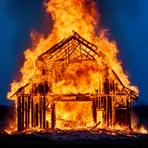
To destroy or use up things quickly, for example when fire burns a building
 50
5.0
50
5.0
To use money, time, or energy for a purpose
 23
3.1
23
3.1
Use up money or time quickly
 16
4.4
16
4.4
Use up money or supplies quickly and wastefully
 13
6.3
13
6.3
To use up almost all of something so little is left
 3
7.0
3
7.0
To use money or energy in a foolish, wasteful way
 2
4.6
2
4.6
To use up the money or help someone needs
Antonyms


How Much

Surface Forms
Etymology
Consume comes from the Latin consumere, with con- 'completely' and sumere 'to take'. So, to consume a resource is to 'take it all up' or use it until there is none left.