

classical
 15
6.5
15
6.5

- adjective
- /ˈklæsɪkəl/
- Specialized
- The behavior of light is often explained through classical theories of electromagnetism.
- classical mechanics
- classical theory
- classical physics
Loading YouTube…
Watch on YouTubeSo that's the scattering process from the classical point of view, OK.
- So that's the scattering process from the classical point of view, OK.
- So this leading term, this classical contribution is already small.
- The answer is in classical physics it doesn't matter.
- There could be different classical theories that give you the same quantum theory.
- And probabilities have to do with consciousness a a classical system, a computer.
- Well, the baseball, you guys, is all so-called classical physics.
- So decoherence converts quantum probabilities to classical probabilities.
- So Hawking used this semi classical approach.
Examples
-
In classical physics, objects follow predictable paths based on Newton's laws of motion.
-
An important achievement of classical information theory is the ability to transmit classical data reliably through a noisy channel.
Academic text (1995) -
OK, So now let's start talking about the classical physics, OK?
-
There could be different classical theories that give you the same quantum theory.
-
Such barriers do not exist in the classical Heisenberg model of a spin system.
Academic text (1999) -
Below it, particle physics; above it, classical physics; but in between, metaphysics.
Academic text (1999) -
In quantum computers, as with classical analog computers, the space of legitimate states is continuous.
Academic text (1995) -
Boltzmann's analysis was, of course, done in terms of classical Newtonian mechanics, and I shall also use that framework.
Academic text (1993) -
Antidot arrays also exhibit intriguing magnetoresistance properties that have been successfully explained by classical ballistic trajectory models.
Academic text (1994) -
Understanding classical mechanics is essential before delving into more advanced topics like quantum mechanics.
Synonyms
 6
6.9
6
6.9
Based on Isaac Newton's ideas about motion, forces, and gravity
Compounds
 62
2.9
62
2.9
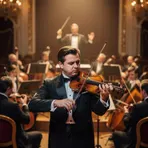
Music that is formal and often played by orchestras, mainly from Europe since the 1700s
 3
3.6
3
3.6
A traditional dance style with precise, formal movements performed to classical music
 1
9.9
1
9.9
A form of Ancient Greek spoken and written in Athens to create famous plays and philosophy around 400 BC
 1
5.3
1
5.3
Art from ancient Greece that uses balance and simple beauty, like statues and temples

- Specialized

 1
3.9
1
3.9
Learning where a neutral thing causes an automatic reaction after being paired many times with something that already causes it

 1
9.4
1
9.4
A person who studies ancient Greek and Latin language, writings, and culture
 1
9.8
1
9.8
The form of Latin used by educated people in ancient Rome, especially in literature and formal writing

- Specialized
Part of physics that explains how objects move when forces act, not using quantum or relativity

- Specialized
Study of ancient languages and texts like Greek, Latin, and Sanskrit

A building style that uses tall columns, symmetry, and simple proportions

- Specialized
The usual design of computers and software that do not use quantum methods

- Specialized
An inherited bleeding disorder where people lack clotting protein factor VIII and bleed for a long time, mainly males
How Classical
- Specialized
15
6.5

- Specialized
- Specialized
- Specialized
64
8.7
Surface Forms
Morphology
Etymology
In physics, classical comes from the same Latin classicus 'of the first class' and now means the older, traditional theories and ideas that came before relativity and quantum physics.