

classical
 48
3.9
48
3.9

- adjective
- /ˈklæsɪkəl/
- The first half of the program is generally classical with a few popular standards or show tunes.
- classical liberalism
- classical economists
- classical and neoclassical
Loading YouTube…
Watch on YouTubeAnd this is pretty much just your classical fantasy.
- And this is pretty much just your classical fantasy.
- This is really the classical portrait of love bombing.
- It is, again, a hallmark classical sign of an unhealthy relationship.
- The charm and charisma are such a classical part of love bombing.
- So when you talk to people, there is a classical liberal bias in most Americans.
- And he says, I want all that and I'm a classical Marxist.
- So the state is thought to be irrelevant really to freedom in the classical liberal tradition.
- First for a fast tournament, rapid and blitz and a classical tournament.
- And I don't think the classical people have a good answer to that.
- So growing up, I was very typical classical sort of tomboy.
- The whole idea of of classical idea, free market.
Examples
-
Many students appreciate learning about classical literature, as it lays the foundation for understanding modern works.
-
I was trained in the classical theatre, you know...
-
At least, in the classical sense.
-
It's a really nice classical guitar, just like playing it.
-
All he ever did was read classical literature, and listened to opera and classical music.
-
The ways students study jazz can enhance their learning of classical repertoire as well.
Academic text (2011) -
His late style has often been seen as constrained, classical, and hard-edged.
Academic text (2013) -
Fragonard's painting exemplifies a classical approach to art, drawing inspiration from ancient themes and techniques.
-
In music class, we studied the classical composers whose works are considered masterpieces of orchestral music.
Synonyms
 539
3.4
539
3.4
A typical, high quality example of its kind
 4
7.9
4
7.9
In line with accepted rules or standards
Antonyms

Compounds
 62
2.9
62
2.9
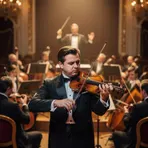
Music that is formal and often played by orchestras, mainly from Europe since the 1700s
 3
3.6
3
3.6
A traditional dance style with precise, formal movements performed to classical music
 1
9.9
1
9.9
A form of Ancient Greek spoken and written in Athens to create famous plays and philosophy around 400 BC
 1
5.3
1
5.3
Art from ancient Greece that uses balance and simple beauty, like statues and temples

- Specialized

 1
3.9
1
3.9
Learning where a neutral thing causes an automatic reaction after being paired many times with something that already causes it

 1
9.4
1
9.4
A person who studies ancient Greek and Latin language, writings, and culture
 1
9.8
1
9.8
The form of Latin used by educated people in ancient Rome, especially in literature and formal writing

- Specialized
Part of physics that explains how objects move when forces act, not using quantum or relativity

- Specialized
Study of ancient languages and texts like Greek, Latin, and Sanskrit

A building style that uses tall columns, symmetry, and simple proportions

- Specialized
The usual design of computers and software that do not use quantum methods

- Specialized
An inherited bleeding disorder where people lack clotting protein factor VIII and bleed for a long time, mainly males
How Established
- Formal
29
6.1
 4
7.9
48
3.9
253
1.0
2
1.0
84
7.0
4
7.9
48
3.9
253
1.0
2
1.0
84
7.0
Surface Forms
Morphology
Etymology
A helpful way to remember classical is to think of class and classic: the Latin classicus meant 'of the first class', so classical describes something long-established, well-known, or a clear model from an important early period.