
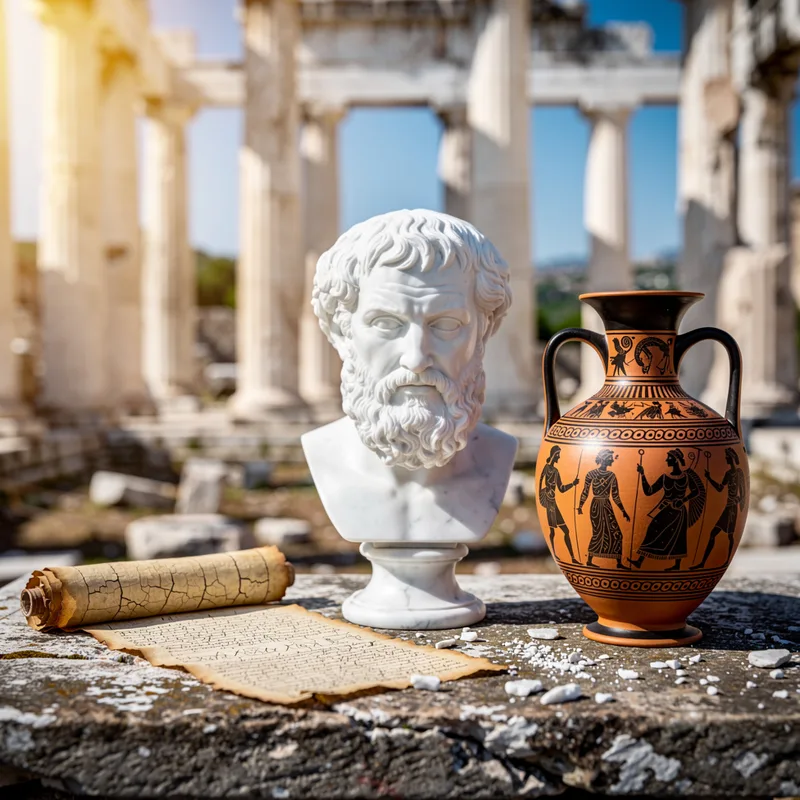
classical
 32
5.1
32
5.1

- adjective
- /ˈklæsɪkəl/
- Students are often required to study classical texts to understand the foundations of Western philosophy.
- classical antiquity
- classical Greek
- classical art
Loading YouTube…
Watch on YouTubeThis is also the case in the classical texts we read.
- This is also the case in the classical texts we read.
- I mean the classical legends and tales.
- I think of much of, of, of classical philosophy.
- And that's, that's more or less it for classical Stoic literature.
- And even in his language, he started with Fuzha means the classical Arabic, you know.
- And the general said, well, he said exactly what a classical Greek tyrant said to another tyrant.
- And so it's it's so so it's new Russia, but it's justified by this connection to the classical world.
- Well, I mean, ancient Greece comes, the classical era of Greek civilization is around the five hundreds BC.
Examples
-
I mean the classical legends and tales.
-
What about classical art films, like Fellini or Buñuel?
-
This is also the case in the classical texts we read.
-
In classical literature, the hero dies.
-
Well, Princeton is a great Center for the study of classical philosophy.
-
Our teachers at the gymnasium were classical Russian performers of the old school.
Fiction book (1996) -
Black Athena will probably engender some productive reflections in classical studies and intellectual history.
Academic text (1991) -
A mausoleum looms behind Stump, bigger than anything in the cemetery: classical, outsized, monumental, even elegant.
Fiction book (1994) -
Many stories in classical literature reflect the values of ancient Greek and Roman societies.
-
The museum features a stunning collection of classical art from the Renaissance period.
Synonyms
 4
6.7
4
6.7
About the art, culture, and history of ancient Greece and Rome

A style that has calm shapes and clear balance like ancient Greek or Roman art
Compounds
 62
2.9
62
2.9
Music that is formal and often played by orchestras, mainly from Europe since the 1700s
 3
3.6
3
3.6
A traditional dance style with precise, formal movements performed to classical music
 1
9.9
1
9.9
A form of Ancient Greek spoken and written in Athens to create famous plays and philosophy around 400 BC
 1
5.3
1
5.3
Art from ancient Greece that uses balance and simple beauty, like statues and temples

- Specialized

 1
3.9
1
3.9
Learning where a neutral thing causes an automatic reaction after being paired many times with something that already causes it

 1
9.4
1
9.4
A person who studies ancient Greek and Latin language, writings, and culture
 1
9.8
1
9.8
The form of Latin used by educated people in ancient Rome, especially in literature and formal writing

- Specialized
Part of physics that explains how objects move when forces act, not using quantum or relativity

- Specialized
Study of ancient languages and texts like Greek, Latin, and Sanskrit

A building style that uses tall columns, symmetry, and simple proportions

- Specialized
The usual design of computers and software that do not use quantum methods

- Specialized
An inherited bleeding disorder where people lack clotting protein factor VIII and bleed for a long time, mainly males
How Homeric

Surface Forms
Morphology
Etymology
Classical comes from the Latin word classicus, which meant 'of the first class' and is related to classis, 'a class' or 'group'. So classical came to describe the culture, literature and art of ancient Greece and Rome because those works were seen as the top, lasting examples.