

cayenne pepper
 4
2.5
4
2.5

- noun
- /ˈkeɪɛn ˈpɛpər/
- Clean off the seeds and toss them with a bit of olive oil, garlic, cayenne pepper, or lemon pepper.
- chili and cayenne peppers
Examples
-
To spice up the dish, she added a teaspoon of cayenne pepper to the sauce.
-
Inside was cayenne pepper, ground up and hot as wildfire.
Fiction book (2002) -
But if you want this to last a little longer than an hour or so, I recommend either using cayenne pepper or cinnamon powder.
-
Also, Rosemary, cayenne pepper, oregano have also been shown to increase blood flow to the brain.
-
He poured himself a full bowl, added cayenne pepper, and began to eat.
Fiction book (1996) -
So I'm adding some cinnamon, some cayenne pepper, and some cumin as well, just about a teaspoon of each.
-
I used 1 egg and 1 egg white, 1/2 a cup of black beans, medium salsa, cayenne pepper, and reduced-fat cheddar cheese to make a spicy, protein-packed breakfast.
Blog text (28) -
The recipe recommends using cayenne pepper to give the soup an extra kick.
-
For a bold flavor, mix in some cayenne pepper with your grilled vegetables.
Synonyms
 11
2.0
11
2.0
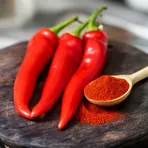
A long hot chili used fresh or dried to add spice to food
 9
2.0
9
2.0
A spicy red or green pepper used to add heat to food
 9
1.0
9
1.0
A small red or green pod that makes food hot
 8
4.2
8
4.2
A long hot red pepper used to add heat in cooking

A long thin very hot pepper often red used to add heat to food
How Hot

Surface Forms
Morphology
The compound 'cayenne pepper' is directly compositional: 'cayenne' names a particular hot capsicum and 'pepper' denotes the capsicum/fruit, so the sense (a hot red pepper or its ground powder used to add heat) follows from the constituents. This is a common noun+noun type-denoting pattern cross-linguistically, so a B1 learner who knows both words would readily understand the MWE.
Etymology
Cayenne pepper is named after the town of Cayenne in South America, where early travellers found long, thin, very hot red chilies. That's why the name came to mean the pepper plant and its red fruits.